
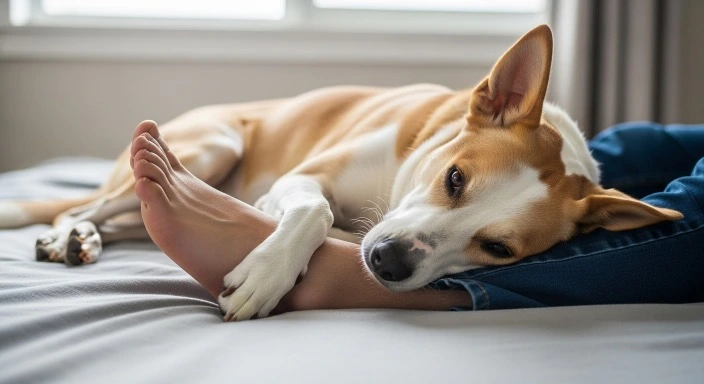
Why Does My Dog Sleep at My Feet
If your dog curls up at your feet every night — whether on the couch, under your desk, or at the end of the bed — you’re not alone. Many pet parents notice this adorable habit and wonder, “Why does my dog always sleep at my feet?”
It’s sweet, comforting, and maybe a little confusing. Is it love? Protection? Or something deeper?
This guide explains the psychology, science, and emotional meaning behind your dog’s bedtime behavior — and when it might signal anxiety or over-attachment.
How to Stop Your Dog From Barking All the Time — Without Punishment
1. Loyalty and Pack Instincts
Why Does My Dog Sleep at My Feet

Why Does My Dog Sleep at My Feet
Dogs are pack animals by nature. In the wild, canines rest close to their pack leader for safety and belonging. When your dog lies at your feet, it’s their way of saying, “You’re my person.”
This behavior stems from an instinctive drive to stay near the leader — protecting and being protected at the same time.
Even when sleeping, dogs maintain awareness of your movements. If you shift, they’ll stir; if you leave the room, they’ll follow. It’s a display of trust and devotion — their silent way of guarding you.
Reference: American Kennel Club – Understanding Pack Behavior in Dogs
2. Your Dog Feels Safe and Secure
Your presence provides warmth, familiarity, and reassurance. When your dog settles near your feet, it’s a sign that they feel safe in your energy.
Just as we might fall asleep faster beside someone we trust, dogs sleep better when they sense emotional stability and calmness. If your pup tends to nap at your feet after a long, stressful day, it’s their way of decompressing.
A calm environment reinforces that trust — keeping lights low, maintaining consistent routines, and offering soft bedding nearby can help.
For related reading, check out How to Help a Senior Dog Sleep Better
3. It’s a Sign of Love and Bonding
Some dogs express affection physically — by leaning against you, licking your hands, or curling up near your legs. Sleeping at your feet is one of the most intimate gestures of canine love.
They can feel your heartbeat, smell your scent, and stay connected without crowding you. This proximity fosters emotional balance for both of you.
If your dog follows you from room to room, lies near you while you work, or rests their head on your toes, congratulations — you’ve earned their full devotion.
4. Protection and Guarding Behavior
Not all dogs sleep at your feet for affection — some do it for protection.
By positioning themselves near you, your dog has a front-row seat to potential threats. Even in peaceful homes, this guarding instinct can surface naturally — especially in breeds like German Shepherds, Boxers, and Labradors.
If your dog tends to sleep facing outward or between you and a doorway, it’s likely an instinctive effort to watch over you.
5. Comfort and Familiar Scent
Dogs navigate the world through smell. Your scent is one of their strongest emotional anchors — it signals love, home, and security.
When they sleep near your feet, they’re enveloped in your familiar smell. This can ease separation anxiety or loneliness, especially for dogs who dislike being alone at night.
If you notice your dog dragging your shoes or blanket to their bed, that’s a further sign they find comfort in your scent.
Read our article: Dog Body Language: How to Understand What Your Dog Is Really Saying
6. Warmth and Physical Comfort
Dogs are heat-seekers. Your feet — and the floor beneath them — tend to be warm spots. Especially in colder months, your dog may curl up there simply because it’s cozy.
Smaller breeds, short-haired dogs, or older pets with joint stiffness appreciate this extra warmth.
You can help by adding a soft blanket or orthopedic bed beside your favorite chair or at the foot of the bed.
7. Anxiety and Separation Concerns
Why Does My Dog Sleep at My Feet

Why Does My Dog Sleep at My Feet
Sometimes, constant closeness points to anxiety rather than affection. Dogs with separation anxiety or fear of isolation might refuse to sleep away from you.
If they whine when you move, follow you excessively, or panic when left alone, it’s worth addressing gently.
Try teaching independence through gradual training — encouraging them to rest on a nearby bed and rewarding calm behavior.
What Sleeping Positions Reveal About Your Dog
| Position | Meaning |
| Curled Up at Your Feet | Seeking warmth and comfort |
| Lying Across Your Feet | Protective and loyal |
| Back to You | Feels secure enough to relax fully |
| Head on Your Shoes or Legs | Deep trust and affection |
| Between You and the Door | Guarding behavior |
Why Does My Dog Sleep at My Feet
Understanding these sleeping patterns helps you read your dog’s emotional language — a crucial part of deepening your bond.
Behavioral Differences by Breed and Personality
Not every dog expresses attachment the same way.
- Large guardian breeds (like Rottweilers or Great Pyrenees) tend to sleep facing entry points to protect their owner.
- Toy breeds (like Chihuahuas or Maltese) prefer direct physical contact — sitting on your lap or between your feet.
- Independent breeds (like Huskies or Basenjis) may rest nearby but not necessarily on you.
Learning your dog’s temperament helps you interpret whether the habit comes from affection, instinct, or both.
When to Set Healthy Boundaries
While most foot-sleeping is harmless, it can become problematic if your dog becomes overly dependent or protective.
Signs to watch for:
- Growling when someone approaches you
- Refusing to move from your feet
- Excessive whining when separated
Encourage your dog to sleep near you but not on you every time. Provide a designated bed close to your space, rewarding them when they use it.
Check also Can Dogs Get Postpartum Depression — The Complete Guide You Need to Know
How to Gently Train Independence
- Start Small: Encourage your dog to rest a few feet away for short periods.
- Use Positive Reinforcement: Reward calm behavior and quiet waiting.
- Create a Routine: Dogs thrive on predictability. Keep bedtime consistent.
- Provide a Comfort Item: A blanket or toy with your scent helps ease separation anxiety.
- Avoid Punishment: Never scold your dog for wanting to be near you — redirect with patience.
For related reading, check out How to Train a Puppy Not to Bite
Emotional Benefits for Owners
Let’s be honest — there’s something incredibly soothing about having a dog rest at your feet. It creates a sense of connection and calm, lowering stress and heart rate.
This mutual comfort strengthens your relationship. Studies show dogs mirror their owners’ emotions, meaning that when you relax, they do too.
It’s not just your dog seeking reassurance — you both find peace in that shared space.
The Bottom Line
So, why does your dog sleep at your feet? Because you’re home, comfort, and family — all in one.
Whether driven by instinct, love, or anxiety, this behavior reveals just how deeply your dog trusts and bonds with you.
If it ever becomes clingy or disruptive, gentle training can restore balance without breaking that connection.
Cherish it. Every nap at your feet is a reminder of the unspoken loyalty only dogs can give.