Can dogs get postpartum depression
If your dog recently gave birth, you might expect her to glow with motherly joy — wagging her tail proudly over her new pups. But instead, she seems distant, tired, or even sad. You might be wondering, “Can dogs get postpartum depression?”
Yes, they can — though it doesn’t always look the same as it does in humans. Mother dogs experience major hormonal changes, emotional stress, and physical fatigue after giving birth. Just like new moms everywhere, some struggle to adjust.
This complete guide explains what postpartum depression in dogs looks like, why it happens, and how you can help your dog heal with patience, love, and care.
What Is Postpartum Depression in Dogs?
Postpartum depression in dogs is an emotional and behavioral change that can happen in the weeks following birth. It often looks like withdrawal, loss of appetite, or avoidance of puppies — signs that may confuse or worry owners.
While dogs don’t experience depression in the same cognitive way humans do, their hormones and instincts can affect mood and behavior in surprisingly similar ways.
For instance, after birth, a mother dog’s levels of progesterone (the “pregnancy hormone”) drop dramatically. This shift affects her brain chemistry and can lead to sadness or irritability. Combine that with the exhaustion of nursing and constant puppy care — it’s no surprise she might need emotional support, too.
Read also: Dog Gut Health 101: Signs of Trouble & Vet-Approved Ways to Fix It
Causes of Postpartum Depression in Dogs
Can dogs get postpartum depression

Can dogs get postpartum depression
Understanding why it happens can help you respond with empathy and the right treatment plan.
1. Hormonal Fluctuations
After delivery, hormones like progesterone, prolactin, and oxytocin fluctuate rapidly. While oxytocin promotes bonding, the sudden drop in other hormones can temporarily affect mood, appetite, and maternal behavior.
2. Puppy Separation or Loss
Losing a puppy — whether through stillbirth or early rehoming — can deeply affect the mother. Dogs can grieve, and that sadness often manifests as lethargy or disinterest in the remaining litter.
3. Stressful Environment
Loud noises, constant visitors, or too much handling can overwhelm a new mother. Stress raises cortisol levels, which can disrupt her ability to relax, nurse, and connect with her pups.
4. Physical Exhaustion or Pain
The birthing process is taxing. If she’s dealing with fatigue, sore nipples, or complications like mastitis, her discomfort may mimic signs of depression.
5. Lack of Experience
First-time mothers are often unsure what to do. Some panic or freeze when their pups cry, leading to avoidance that can worsen feelings of anxiety or confusion.
Source: American Kennel Club – Maternal Behavior in Dogs
Recognizing the Signs of Postpartum Depression
1. Withdrawal or Avoidance
She hides, avoids contact with her pups, or refuses to nurse. Instead of protecting her litter, she isolates herself — a key emotional red flag.
2. Loss of Appetite
Some mothers stop eating after giving birth. The emotional distress paired with hormonal changes may suppress appetite, affecting milk supply.
3. Lethargy or Oversleeping
While tiredness is normal, sleeping constantly without engaging or showing excitement can suggest depression.
4. Aggression or Restlessness
If your normally gentle dog growls, paces, or appears tense, she might be struggling with anxiety rather than aggression.
5. Crying or Whining
Some dogs vocalize their distress. Continuous whining, especially when separated from the litter, can signal confusion or emotional imbalance.
When Postpartum Depression Becomes a Medical Concern
Not every sad or tired mother dog has postpartum depression — sometimes, physical complications masquerade as emotional distress.
Contact your vet immediately if you notice:
- Refusal to eat or nurse for more than 12 hours
- Swollen, hot, or painful nipples
- Foul vaginal discharge
- Trembling, weakness, or fever
- Vomiting or diarrhea
These symptoms may indicate mastitis, uterine infection, or hypocalcemia (low calcium). Untreated, these can become life-threatening.
Source: Merck Vet Manual– Postpartum Conditions in Dogs
How to Support Your Dog Emotionally
Can dogs get postpartum depression

Can dogs get postpartum depression
1. Provide a Calm Environment
Choose a quiet, dimly lit space for her and her litter. Avoid unnecessary visitors and keep other pets away during the first few weeks.
2. Offer Gentle Reassurance
Sit near her, speak softly, and reward small positive behaviors. Never force interaction — let her approach you or the puppies at her own pace.
3. Establish a Routine
Predictable feeding, cleaning, and rest times help her feel secure. Dogs thrive on structure, especially during emotional instability.
4. Keep Her Hydrated and Nourished
Feed her a high-quality puppy or nursing formula diet. Add warm broth to stimulate appetite if needed.
5. Encourage Physical Comfort
If her body aches, a soft bed, clean bedding, and temperature-controlled room can ease tension and improve rest.
Our other article suggestion: How to Help a Senior Dog Sleep Better
Holistic & Emotional Healing Approaches
Massage and Touch Therapy
Gentle stroking releases oxytocin, which helps calm the nervous system and strengthens the bond between you and your dog.
Aromatherapy (Vet-Approved)
Lavender and chamomile can help reduce anxiety, but always use pet-safe, diluted essential oils away from the whelping area. Read more here : Is Eucalyptus Safe for Dogs? Expert Advice on Pet Safety.
Play and Exercise
As she regains energy, short walks and light play can elevate mood and rebuild confidence.
Helping Her Reconnect With Her Puppies
Some mothers temporarily reject their pups due to exhaustion or fear. To rebuild that connection:
- Sit near her while gently guiding puppies to nurse.
- Reward her with praise and treats when she stays calm.
- Never punish or scold her — it will only heighten anxiety.
Most dogs gradually resume maternal care once they feel secure and rested.
Emotional Support for the Owner
Seeing your dog withdrawn or anxious can be heartbreaking. Remember, your energy affects hers. Stay calm, follow routines, and celebrate small improvements.
You’re her anchor — the more relaxed and confident you remain, the faster she’ll recover.
Real-Life Example: Bella’s Story
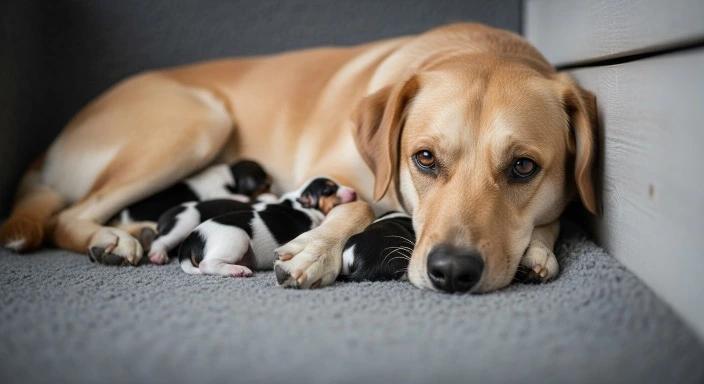
Bella, a two-year-old lab mix, gave birth to five puppies. At first, she seemed fine — but within a week, she started refusing food and avoiding her litter. Her owner noticed that Bella spent most of her time lying with her back to the puppies.
After a vet check ruled out infection, Bella’s family followed a gentle recovery plan: a calm, cozy environment, nutritional supplements, and daily bonding time.
Within two weeks, Bella was back to nursing and licking her pups affectionately. Her recovery reminds us that, with patience and care, even emotional wounds heal.
Bringing It All Together
So, can dogs get postpartum depression? Yes — and they deserve our understanding.
Hormonal changes, exhaustion, or stress can make even the most loving dog withdraw temporarily. But with proper nutrition, calm surroundings, and gentle affection, she’ll recover her joy — and her motherly instinct.
If your dog shows persistent sadness or physical symptoms, consult your vet early. Together, you can ensure she gets both the medical and emotional support she needs.
Remember: love, time, and comfort heal the heart — even a furry one.
Celebrate every stage of your pet’s life on MyPetMyJoy.com — where pets are family forever.
Can dogs get postpartum depression
Can dogs get postpartum depression
