
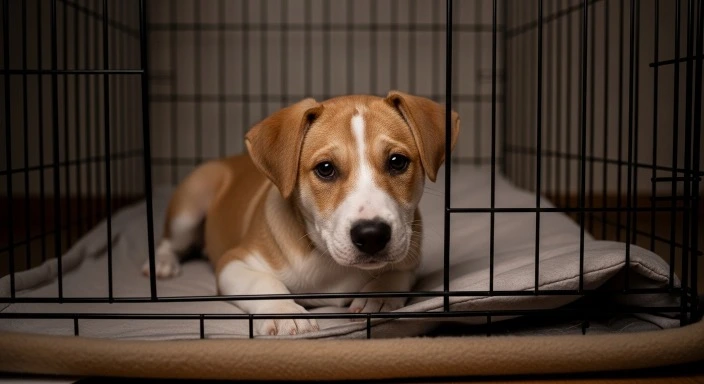
why does my puppy cry in the crate at night
It’s 2:17 a.m. The house is dark.
You’re half asleep.
And from across the room — or maybe from another room entirely — you hear it.
Crying.
Not just a little whimper.
A confused, lonely, “Where are you?” sound.
If you’ve been asking, “Why does my puppy cry in the crate at night?”, you are not alone.
Almost every new puppy parent experiences this moment.
And here’s the most important thing to know first:
Your puppy is not trying to manipulate you.
They are adjusting.
Nighttime crate crying is one of the most common early challenges — and understanding why it happens is the key to handling it with confidence and compassion.
Let’s gently walk through what’s really going on.
Why Does My Puppy Cry in the Crate at Night?
When a puppy cries in the crate at night, it’s usually about one (or more) of these:
- Separation from littermates
- Adjustment to a new home
- Biological needs (like needing to potty)
- Uncertainty in a new routine
- Learning independence
Most of the time, it’s not defiance.
It’s transition.
Remember — your puppy may have slept their entire life surrounded by siblings. Suddenly, they’re alone in a new environment with unfamiliar smells, sounds, and rhythms.
That’s a big emotional shift.
The Emotional Science Behind Night Crying
Puppies are biologically wired for closeness in early development.
According to the American Veterinary Medical Association, young dogs rely heavily on proximity for security during early socialization stages.
At night, sensory input decreases:
- It’s darker.
- It’s quieter.
- There’s less activity.
Without stimulation, awareness of separation increases.
Your puppy may cry because:
- They cannot see you.
- They cannot smell siblings.
- They feel uncertain about safety.
Crying is their communication tool.
It doesn’t mean the crate is bad.
It means the situation is new.

Is It Normal for a Puppy to Cry in the Crate at Night?
Yes — especially in the first few days or weeks.
Many puppies cry for:
- 5–20 minutes initially
- A few nights in a row
- Short bursts when adjusting
Gradual improvement is common when crate training is consistent and gentle.
The ASPCA emphasizes gradual acclimation and positive association to reduce anxiety during crate training.
The goal isn’t immediate silence.
It’s growing security.
How to Tell the Difference Between Adjustment Crying and Distress
This part matters.
Adjustment Crying Often Sounds Like:
- Short whimpers
- Intermittent fussing
- Settling after a few minutes
Distress Crying May Include:
- Escalating intensity
- Continuous panic
- Scratching aggressively at crate
- Excessive drooling
Mild adjustment is normal.
Panic-level behavior should not be ignored.
If crying escalates rather than decreases over days, reassess your approach.
Why Nighttime Feels Harder Than Daytime
During the day, puppies experience:
- Activity
- Play
- Social interaction
- Light
- Background noise
At night, they lose those anchors.
Silence magnifies uncertainty.
Many puppies simply need time to build nighttime confidence.
Placing the crate near your bed for the first week can help ease the transition.
It doesn’t create dependency — it supports attachment security.
Gradually increasing distance over time builds independence.

Should You Ignore Nighttime Crying?
This is one of the most debated questions.
The answer depends on context.
If Crying Is Mild and Brief
Waiting a short time may allow self-settling.
If Crying Is Escalating or New
Check:
- Bathroom needs
- Temperature comfort
- Hunger timing
- Overstimulation before bed
Young puppies often need nighttime potty breaks. Their bladders are small.
If you take them out:
- Keep lights low.
- Keep voice calm.
- No play.
- Return to crate gently.
You’re teaching nighttime = quiet business, not party time.
How to Reduce Crying Before It Starts
Prevention often works better than reaction.
1. Create a Predictable Bedtime Routine
- Potty
- Gentle play
- Calm wind-down
- Crate
Predictability reduces anxiety.
2. Avoid Overtiredness
Overstimulated puppies struggle to settle.
3. Add Familiar Comfort
- A safe blanket
- A toy with your scent
- Soft white noise
4. Keep the Crate Cozy
Not too big.
Not drafty.
Not isolated.
Small environmental tweaks can reduce nighttime stress dramatically.
Does Covering the Crate Help?
Some puppies settle better with partial coverage.
A light crate cover can:
- Reduce visual stimulation
- Create a den-like feel
- Block distracting movement
However, some puppies prefer visibility.
Observe your puppy’s reaction.
There is no universal rule.
Every dog is different.
What If My Puppy Keeps Crying Every Night?
If crying persists beyond a couple of weeks despite consistent training:
Consider:
- Is the crate introduction too fast?
- Is the crate location too isolated?
- Is daytime crate exposure limited?
- Is there underlying anxiety?
Our full guide on How to Crate Train a Puppy Fast (While Building Confidence & Trust) explores deeper confidence-building strategies that often reduce nighttime crying.
If clinginess appears outside crate time too, you may also find insight in:
Why Does My Dog Cry When I Leave?
Patterns matter more than single nights.
The Emotional Side for You
Let’s talk about the guilt.
It’s normal to feel:
- Heartbroken hearing cries
- Worried you’re doing harm
- Tempted to abandon the crate altogether
But gentle crate training is not abandonment.
It’s teaching resilience.
Your puppy is learning:
“I can be alone briefly and still be safe.”
That’s a lifelong skill.
The key is to prevent panic — not eliminate all adjustment.

When to Be Concerned
Most crate crying decreases with time and structure.
However, seek guidance if you observe:
- Persistent extreme panic
- Self-injury attempts
- Refusal to eat outside crate
- Ongoing regression after initial success
The Humane Society of the United States encourages positive reinforcement training and professional support for ongoing anxiety concerns.
Support is not failure.
It’s care.
FAQ: Why Does My Puppy Cry in the Crate at Night?
How long will my puppy cry at night?
Many puppies improve within days to weeks. Adjustment varies.
Should I move the crate into my bedroom?
Often helpful initially. Gradual distance builds independence later.
Is it cruel to crate train at night?
Not when done gently and gradually.
What if my puppy only cries at 3 a.m.?
Likely biological need. Try a scheduled potty break.
Will responding to crying spoil my puppy?
Calm, consistent responses build trust, not dependence.
Final Thoughts: Night Crying Is a Phase — Not a Failure

If you’ve been asking, “Why does my puppy cry in the crate at night?”, the answer is usually simple:
They are adjusting.
They are learning.
They are growing.
This phase can feel exhausting.
But it is temporary.
With patience, consistency, and emotional awareness, nighttime crying softens into quiet sleep.
Confidence grows.
Trust deepens.
And one night soon, you’ll realize you slept through the whole night — and so did your puppy.
Celebrate every moment with your furry friend on MyPetMyJoy.com — where pets are family forever.