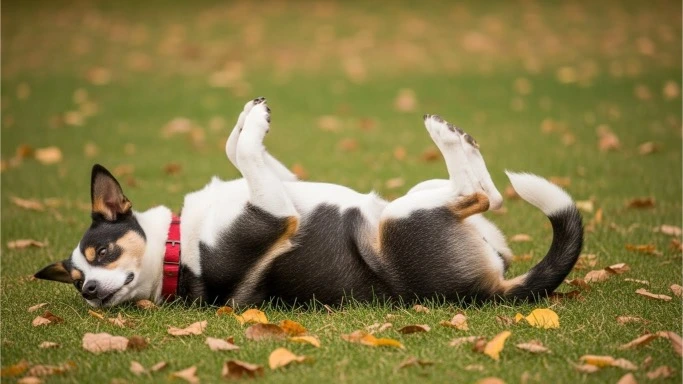
If you’ve ever enjoyed a peaceful walk with your dog — only to turn around and see them gleefully rolling in something absolutely awful — you’re not alone. One second they’re sniffing the grass, and the next… disaster.
Dead fish.
A lifeless bird.
Something unidentifiable that smells like regret.
And you’re standing there thinking:
“Why would my dog do this on purpose?”
As gross (and confusing) as it feels, this behavior is actually very normal — and it has nothing to do with disobedience, bad training, or your dog trying to embarrass you.
In this guide, we’ll talk honestly about why dogs roll in dead things, what instinct is driving it, whether it’s dangerous, how to prevent it, and what to do when it inevitably happens again. Because once you understand the reason, the behavior makes a lot more sense — even if it never smells better.
The Short Answer: It’s Instinct, Not Bad Behavior
Dogs don’t roll in dead things because they like being dirty.
They do it because their instincts tell them to.
This behavior is deeply rooted in canine history, survival, and scent communication. Even the most pampered, couch-loving dogs still carry ancient instincts — and sometimes those instincts smell terrible.
Ancient Survival Instincts Still Live Inside Your Dog
Long before dogs slept in beds and ate from bowls, their ancestors had to survive in the wild.
Rolling in strong smells helped them:
- Mask their own scent
- Blend into the environment
- Avoid detection by prey or predators
- Carry information back to the pack
To a dog’s instincts, dead animals have powerful, meaningful scents. Rolling in them wasn’t gross — it was useful.
Even though your dog no longer needs to hunt, the instinct hasn’t disappeared.
Dogs Experience the World Through Smell (Not Cleanliness)
Humans experience the world visually.
Dogs experience the world through scent.
What smells disgusting to you can smell fascinating to your dog.
Dead animals contain:
- Strong biological markers
- Layers of scent information
- Traces of other animals
- Environmental signals
When your dog rolls, they’re not thinking, “This is gross.”
They’re thinking, “This smells important.”
Rolling Is a Way to “Wear” a Scent
One of the strongest reasons dogs roll in dead things is to carry the scent on their body.
To a dog, rolling is like saying:
“I want this smell on me.”
Why?
- To communicate with other dogs
- To mark identity
- To feel connected to the environment
This instinct is similar to why dogs roll in fox droppings, manure, or fish remains.
Some Dogs Roll to Share the Scent With You
This part surprises many people.
Some behavior experts believe dogs roll in strong smells and then come back to their humans as a way of sharing information.
Your dog may be thinking:
“Look what I found.”
It’s not personal.
It’s communication.
Rolling Can Be Triggered by Excitement or Overstimulation
Dogs are more likely to roll in dead things when they’re:
- Highly stimulated
- Off-leash
- In new environments
- Excited by unfamiliar smells
This is why it often happens on hikes, beaches, or nature trails.
Certain Breeds Are More Likely to Roll
Some breeds are more scent-driven than others.
Dogs more likely to roll include:
- Hounds (Beagles, Bloodhounds)
- Terriers
- Retrievers
- Herding breeds
- Working dogs
These dogs were bred to follow scent, track animals, or work closely with the environment.
Puppies Roll Because They’re Exploring Instincts
If your dog is young, this behavior may appear suddenly.
Puppies:
- Experiment with instinct
- Explore boundaries
- React strongly to new scents
Most puppies will roll less as training and recall improve — but many never stop completely.
Is Rolling in Dead Things Dangerous?

Sometimes yes — sometimes no.
Potential Risks Include:
- Parasites
- Bacteria
- Skin irritation
- Exposure to toxins
- Strong odors that are hard to remove
This is especially concerning if:
- The animal appears recently deceased
- The area is contaminated
- Your dog has cuts or skin issues
If your dog ingests any part of a dead animal, contact your vet immediately.
For general safety guidance, the ASPCA explains environmental hazards clearly.
What to Do Immediately If Your Dog Rolls in Something Dead
First: breathe.
Then follow these steps.
Step 1: Stop Them Gently
Use a calm recall command. Avoid yelling — excitement increases rolling.
Step 2: Keep Them Leashed
If possible, leash immediately to prevent repeat behavior.
Step 3: Avoid Letting Them Shake Near You
This is crucial.
Step 4: Clean as Soon as Possible
The longer the scent stays, the deeper it sets.
How to Clean a Dog After Rolling in Dead Things
Here’s what actually works.
Option 1: Dog Shampoo (Best Choice)
Use a deodorizing or enzyme-based dog shampoo.
Option 2: Baking Soda + Water
Helps neutralize odor before shampooing.
Option 3: Vinegar Rinse (Diluted)
Breaks down scent oils — avoid eyes and open skin.
Never use human shampoo regularly. It disrupts skin pH.
Can You Train a Dog Not to Roll in Dead Things?
You can reduce it — but you can’t erase instinct.
What Helps:
- Strong recall training
- Keeping dogs leashed in high-risk areas
- Redirection before rolling starts
- “Leave it” command
- Watching body language closely
Training doesn’t remove instinct — it gives you control.
Why Dogs Roll in Dead Things but Also Roll in Grass
If you read our MyPetMyJoy guide on why dogs roll in grass, you know rolling isn’t always gross. It’s often about comfort and sensation.
Dead-thing rolling is the intensified version — driven by scent instead of texture.
These behaviors come from the same instinct family.
Is This Behavior a Sign My Dog Is Unhappy?
No.
Rolling in dead things does not mean:
- Your dog is unhappy
- Your dog dislikes baths
- Your dog is rebelling
- Your dog isn’t trained
It means your dog is acting like a dog.
When You Should Talk to a Vet
Contact your vet if:
- Your dog ingests something dead
- Vomiting or diarrhea occurs
- Skin reactions appear
- The animal may have been poisoned
Short FAQ: Why Does My Dog Roll in Dead Things?
Is this normal dog behavior?
Yes. It’s instinctive and common.
Can training stop it completely?
No — but it can reduce it significantly.
Is it dangerous?
Sometimes. Watch for ingestion or illness.
Does my dog enjoy the smell?
In their own way, yes.
Final Thoughts

Rolling in dead things feels horrifying from a human point of view — but to your dog, it’s instinct, communication, and curiosity all rolled into one very smelly moment.
Your dog isn’t misbehaving.
They aren’t broken.
They aren’t trying to make your life harder.
They’re just being a dog.
With awareness, training, and quick cleanup, this behavior becomes manageable — even if it never becomes pleasant.And if nothing else, it makes one thing very clear:
dogs experience the world very differently than we do.
You also will like to read Why Does My Dog Roll in the Grass?