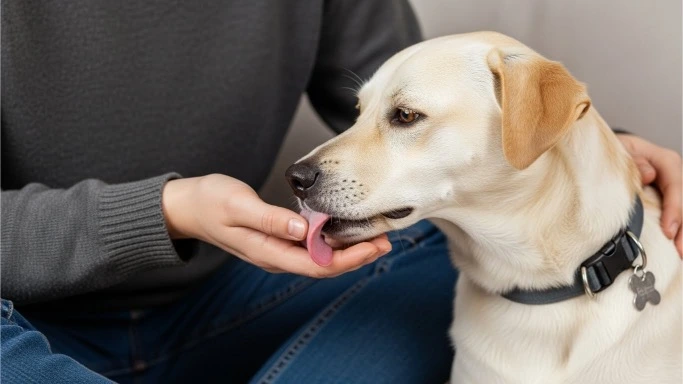
If you’re a dog parent, chances are you’ve experienced this moment more times than you can count: you sit down on the couch, reach out your hand, and suddenly your dog starts licking it — gently, repeatedly, sometimes enthusiastically.
It can feel sweet.
It can feel confusing.
And sometimes, you might even wonder if it’s a habit you should stop.
So let’s answer the question honestly and clearly:
Why does my dog lick my hands?
The truth is, hand-licking is one of the most common dog behaviors — and in most cases, it’s completely normal. But like many dog behaviors, the reason behind it matters. Licking can mean affection, communication, comfort, curiosity, stress, or even habit.
In this guide, we’ll explore all the real reasons dogs lick hands, how to tell the difference between loving behavior and emotional signals, when it’s okay to allow it, and when it’s best to gently redirect it.
No judgment.
No fear.
Just clear, compassionate answers.
The Short Answer: Licking Is a Form of Communication
Dogs don’t have words, so they use behaviors. Related article
Licking is one of the earliest ways dogs communicate — starting as puppies and continuing throughout life. When your dog licks your hands, they’re usually sending a message, not acting randomly.
That message depends on the situation, your dog’s body language, and the context.
Let’s break it down.
1. Your Dog Is Showing Affection

This is the most common reason — and the one most dog parents hope for.
Dogs lick the people they love.
It’s their version of a kiss.
In the wild, dogs lick members of their pack to reinforce bonds. In your home, you are their pack.
Signs the licking is affectionate:
- Relaxed body language
- Soft eyes
- Gentle tail wag
- Calm posture
- Licking happens during quiet moments
In these cases, licking is your dog’s way of saying, “I love you. I trust you.”
2. Licking Is Comforting for Your Dog
Licking releases calming chemicals in a dog’s brain. It can help them relax, especially when they feel content, sleepy, or emotionally connected.
That’s why dogs often lick:
- Before naps
- During cuddles
- When you’re calm and relaxed
- During quiet bonding moments
For some dogs, licking your hands feels grounding — like a soothing ritual.
3. Your Hands Smell (and Taste) Interesting
Let’s be honest — hands are fascinating to dogs.
Your hands carry:
- Food smells
- Natural skin salts
- Lotion or soap scents
- Traces of the day’s activities
Dogs explore the world through their mouths. Licking helps them gather information.
If your dog licks your hands after:
- Eating
- Cooking
- Petting other animals
- Applying lotion,
curiosity is likely part of the reason.
4. Licking Is a Learned Behavior
Dogs repeat behaviors that get a response.
If your dog licks your hands and you:
- Laugh
- Talk to them
- Pet them
- React emotionally
They may learn that licking equals attention.
This doesn’t mean manipulation.
It means your dog learned what works.
Over time, licking can become a habit tied to interaction.
5. Puppies Lick as a Natural Instinct
If your dog is still young, licking is especially normal.
Puppies lick because:
- It’s how they communicate with their mother
- It’s how they ask for attention or food
- It’s how they explore the world
- It’s comforting and familiar
Most puppies grow out of excessive licking as they mature — especially with gentle guidance.
6. Your Dog Is Seeking Reassurance

Dogs are sensitive to human emotions.
If you’re:
- Stressed
- Sad
- Anxious
- Sick
- Tired
Your dog may lick your hands as a way to check in or comfort you.
In these moments, licking isn’t about them — it’s about you.
Many dog parents notice increased licking during emotional times. That’s because dogs respond to subtle changes in tone, posture, and energy.
7. Licking Can Be a Sign of Mild Anxiety

Sometimes, licking isn’t just affection — it’s self-soothing.
If your dog licks your hands:
- Repeatedly
- Rapidly
- With tense body language
- During stressful situations
…it may be a coping behavior.
Common triggers include:
- Loud noises
- New environments
- Visitors
- Changes in routine
- Separation stress
In these cases, licking helps your dog regulate their emotions.
8. Some Breeds Lick More Than Others
Certain breeds are more prone to licking due to temperament and sensitivity.
Breeds that often lick more:
- Labrador Retrievers
- Golden Retrievers
- Cavalier King Charles Spaniels
- Boxers
- Australian Shepherds
- Border Collies
These dogs are typically affectionate, people-oriented, and emotionally expressive.
Read our article about Excellent Family Dogs.
9. Medical Reasons (Less Common, But Important)
Excessive licking can sometimes be linked to health issues — especially if it appears suddenly or increases dramatically.
Possible medical factors include:
- Gastrointestinal discomfort
- Nausea
- Allergies
- Dental pain
- Skin irritation
- Nutritional deficiencies
If licking is paired with:
- Drooling
- Loss of appetite
- Lethargy
- Paw licking
- Changes in behavior,
it’s worth checking with a vet.
Is It Bad If My Dog Licks My Hands?
In most cases, no.
Hand licking is harmless when:
- It’s gentle
- It’s occasional
- Your dog is relaxed
- There are no signs of stress or obsession
It becomes a concern only when it’s:
- Compulsive
- Stress-driven
- Constant
- Paired with anxiety or discomfort
Context matters more than the behavior itself.
Should I Let My Dog Lick My Hands?
This is a personal choice.
Some people enjoy it.
Some don’t.
If you’re okay with it and your dog is calm, there’s no reason to stop it.
If you prefer less licking, you can gently redirect without punishment.
How to Gently Reduce Hand Licking (If Needed)

You don’t need to scold or push your dog away.
Here’s what works better:
1. Stay Calm and Neutral
Strong reactions can reinforce the behavior.
2. Redirect to Another Behavior
Offer:
- A toy
- A chew
- A training cue like “sit”
3. Reward Calm Interaction
Praise your dog when they sit calmly without licking.
4. Address Underlying Needs
More exercise, mental stimulation, or comfort can reduce licking.
Licking vs. Kissing: What’s the Difference?
From your dog’s perspective, there isn’t one.
Dogs don’t kiss the way humans do.
Licking is their version of affection, bonding, and communication.
When your dog licks your hands, they’re interacting in the most natural way they know.
Common Questions Dog Parents Ask
4. Is hand licking normal for dogs?
Yes. It’s one of the most common forms of dog communication.
Does licking always mean affection?
Not always. It can also signal curiosity, comfort-seeking, or mild anxiety.
Should I worry if my dog licks a lot?
Only if it’s compulsive or paired with stress or health changes.
Why does my dog lick my hands and then look at me?
They’re often checking your reaction or seeking connection.
Why does my dog lick my hands before bed?
It’s calming and part of their bonding routine.
Is licking a sign of submission?
Sometimes. Licking can signal respect or appeasement, especially in younger dogs.
Can licking mean hunger?
Occasionally, especially if it happens around mealtimes.
Can I train my dog to stop licking?
Yes, gently — through redirection and positive reinforcement.
For related reading, check out Common Dog Behavior Issues
The bottom line
When your dog licks your hands, they’re not being weird, needy, or misbehaved.
They’re communicating.
Most of the time, they’re saying:
“I love you.”
“I feel safe.”
“I want to be close.”
By paying attention to context and body language, you can understand what your dog is really expressing — and respond with patience and care.
Because at the end of the day, hand licking is usually just another way your dog shows the bond you share.