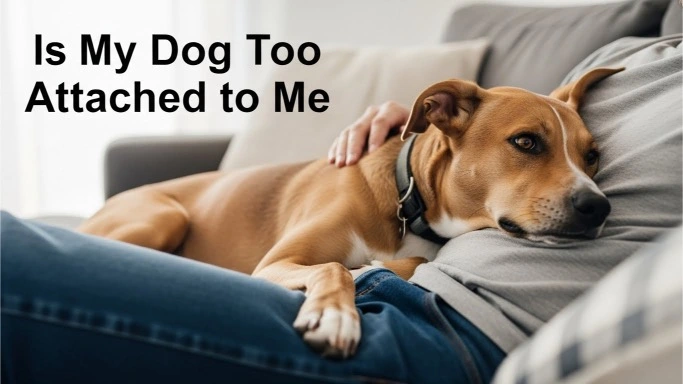
If your dog follows you from room to room, waits outside the bathroom door, or seems happiest only when you’re nearby, you might have wondered something many pet parents quietly ask themselves: “Is my dog too attached to me?”
It’s a fair question.
And it doesn’t make you ungrateful or unloving.
Sometimes the behavior feels sweet. Sometimes it feels intense. And sometimes it makes you worry that your dog might be anxious, dependent, or struggling emotionally.
The honest truth is this: most dogs who stay close to their humans are not “too attached.” They are bonded, social, and emotionally connected. But there is a line between healthy attachment and emotional distress — and knowing the difference matters.
In this guide, we’ll talk openly about:
- What healthy attachment looks like
- When closeness becomes a concern
- Why some dogs attach more deeply than others
- How to support your dog without damaging your bond
- What to do if anxiety is involved
No judgment. No fear. Just clear, compassionate answers.
Attachment Is Normal for Dogs
Dogs are not independent animals by nature.
They evolved alongside humans. They survived by staying close to their group.
In your home, you are their group.
So attachment — following you, watching you, choosing to rest near you — is normal, healthy behavior for most dogs. In fact, a complete lack of attachment would be more concerning than closeness.
Dogs form bonds based on:
- Safety
- Consistency
- Care
- Emotional connection
If your dog prefers your company, that usually means they trust you.
Healthy Attachment vs. Unhealthy Attachment
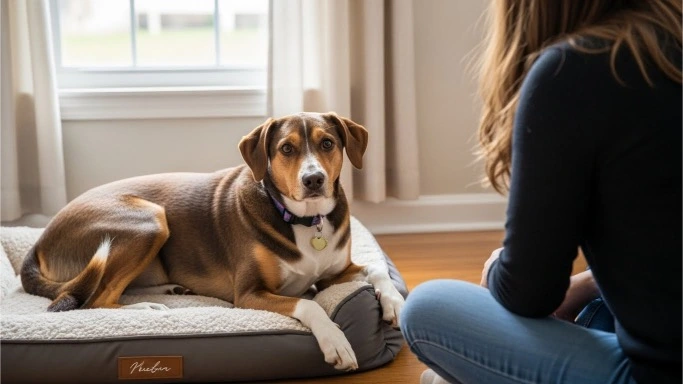
This is where many pet parents get confused.
Let’s make it simple.
Healthy Attachment Looks Like This:
- Your dog follows you but can relax alone
- They nap while you work in another room
- They eat and drink normally when you’re gone
- They enjoy time with other family members
- They recover quickly after you leave
Unhealthy Attachment (Anxiety-Based) Looks Like This:
- Panic when you leave the room
- Crying, pacing, or drooling
- Destructive behavior when alone
- Refusing food in your absence
- Extreme distress when separated
- Inability to self-soothe
One is love.
The other is fear.
The goal is not to reduce love, but to reduce fear.
Why Some Dogs Become Extra Attached
Not all dogs attach the same way. Several factors influence how close your dog feels to you.
1. You Are Your Dog’s Primary Caregiver
Dogs bond strongest with the person who:
- Feeds them
- Walks them
- Trains them
- Comfort them during stress
- Spends calm, consistent time with them
If that person is you, closeness is expected.
This doesn’t mean your dog ignores others. It simply means you are their emotional anchor.
2. Breed Personality Plays a Big Role
Some breeds are known as “velcro dogs.” They were bred to work closely with humans or provide companionship.
Examples include:
- Labrador Retrievers
- Golden Retrievers
- Border Collies
- Australian Shepherds
- German Shepherds
- Cavalier King Charles Spaniels
- Boxers
- Vizslas
For these dogs, staying close is part of their nature — not a flaw.
3. Past Experiences Matter
Dogs who experienced:
- Rehoming
- Shelter life
- Abandonment
- Sudden changes
- Loss of a previous owner
…may cling more tightly once they feel safe.
Attachment, in these cases, often comes from relief, not weakness.
4. Emotional Sensitivity and Empathy
Dogs read human emotions extremely well.
If you:
- Are calm and gentle
- Offer emotional comfort
- Spend quiet bonding time
- Respond consistently
Your dog may feel especially connected to you.
Some dogs are naturally more emotionally sensitive. They seek closeness not out of fear, but connection.
When Attachment Becomes a Problem
Let’s be honest — sometimes attachment crosses into distress.
Ask yourself these questions:
- Does my dog panic when I leave?
- Does my dog destroy things only when I’m gone?
- Does my dog refuse to eat without me?
- Does my dog seem unable to relax alone?
- Does my dog show fear, not just preference?
If the answer is yes, your dog may be experiencing separation anxiety, not simply attachment.
This is not bad behavior.
It’s emotional discomfort.
Common Signs Your Dog May Be Too Emotionally Dependent
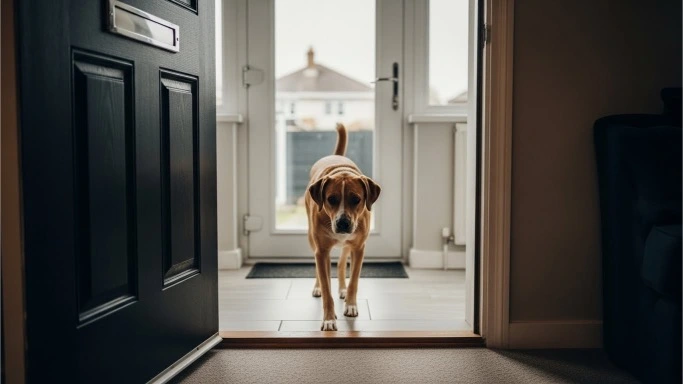
Look for patterns, not isolated moments.
Signs include:
- Following you constantly with tense body language
- Whining when you move away
- Pawing or nudging for reassurance
- Heavy panting when alone
- Barking immediately after you leave
- Chewing doors, crates, or furniture
- Accidents despite being house-trained
These behaviors say: “I don’t feel safe alone.”
Why Punishing Attachment Makes Things Worse
Some people believe ignoring or pushing away an attached dog will “teach independence.”
In reality, punishment or emotional distance often increases anxiety.
Dogs don’t understand rejection as training.
They experience it as confusion or fear.
Independence must be built gently, through confidence — not separation or coldness.
How to Support Your Dog Without Breaking the Bond
You can help your dog feel secure and independent at the same time.
Here’s how.
1. Normalize Calm Separation
Start small.
- Step into another room for a minute
- Return calmly
- Do not make a big deal about leaving or returning
Your energy teaches your dog what is safe.
2. Encourage Rest Away From You (Gently)
Place a comfortable bed or mat a short distance away.
Reward calm behavior when your dog chooses to rest there.
Never force distance.
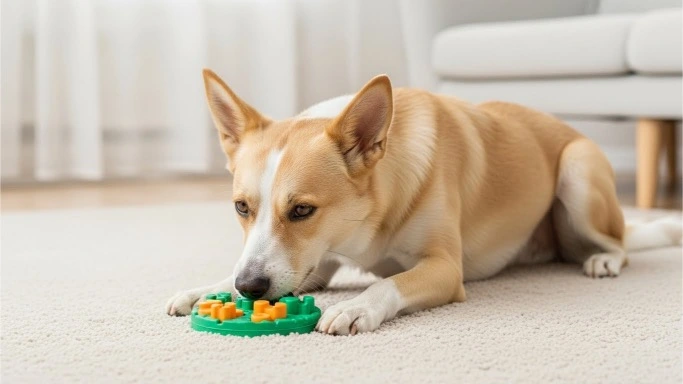
3. Create Positive Alone-Time Activities
Give your dog something enjoyable that happens only when you step away:
- Puzzle toys
- Long-lasting chews
- Food-dispensing toys
This helps reframe alone time as positive.
4. Stick to Predictable Routines
Dogs feel safest when they know what to expect.
Consistent:
- Walk times
- Feeding times
- Sleep routines
…build confidence and reduce anxiety.
5. Increase Mental and Physical Stimulation
A tired dog is a calmer dog.
Daily:
- Walks
- Sniffing opportunities
- Training games
- Gentle play
Mental enrichment reduces emotional dependency.
Puppies vs. Adult Dogs: Does Age Matter?
Yes — a lot.
Puppies
Puppies follow closely because:
- The world is new
- They are learning safety
- They haven’t developed independence yet
This usually improves with maturity.
Adult Dogs
Adult dogs with sudden attachment changes may be reacting to:
- Stress
- Routine changes
- Health issues
- Emotional shifts in the household
Sudden behavior changes always deserve attention.
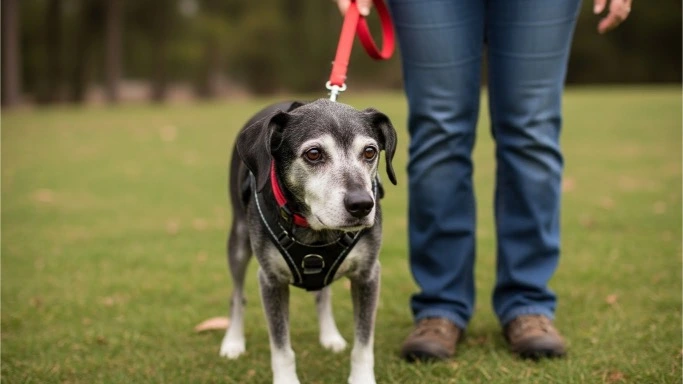
Senior Dogs
Older dogs may follow more because:
- Hearing or vision declines
- They feel safer near familiar people
- Cognitive changes occur
This is usually comfort-based, not anxiety.
Read also : How to Help a Senior Dog Sleep Better
Is It My Fault If My Dog Is Too Attached?
No.
Attachment does not mean you “spoiled” your dog.
It means:
- You provided safety
- You were consistent
- You built trust
If anxiety is present, it’s not about blame.
It’s about support.
Common Questions Pet Parents Ask
Is my dog following me a sign of dominance?
No. This is an outdated belief. Following behavior is about connection, not control.
Should I ignore my dog to reduce attachment?
No. Ignoring increases insecurity. Calm reassurance and structured independence work better.
Can dogs love too much?
Dogs don’t love “too much.” They can feel unsafe alone — and that’s what needs support.
Will independence damage our bond?
No. Healthy independence actually strengthens trust.
Is it bad if my dog follows me everywhere?
No. Following is normal unless it’s paired with fear or panic.
How do I know if it’s anxiety?
Anxiety shows as distress, not calm companionship.
Should I encourage independence?
Yes — gently and positively.
Can attachment improve over time?
Yes. With consistency and reassurance, most dogs gain confidence.
The Honest Truth
Most dogs who stick close are not “too attached.”
They are:
- Loyal
- Social
- Emotionally connected
- Trusting
Only when closeness becomes fear-based does it need attention.
Your job isn’t to create distance.
It’s to create confidence.
And when done gently, you can have both:
a deeply bonded dog and a confident, independent one.
The bottom line
If your dog follows you everywhere, take it as information — not a problem.
Watch how they behave when alone.
Notice whether they relax or panic.
Respond with patience, not pressure.
Most of the time, what you’re seeing is love.
And love, when guided with understanding, becomes security — not dependence.
You will also like to read the related article
Our Authority Sources
- https://www.akc.org/expert-advice/training/is-my-dog-too-attached/
- https://www.aspca.org/pet-care/dog-care/common-dog-behavior-issues/separation-anxiety
- https://www.merckvetmanual.com/dog-owners/behavior-of-dogs/diagnosing-behavior-problems-in-dogs?query=undefined
- https://vcahospitals.com/know-your-pet/separation-anxiety-in-dogs