
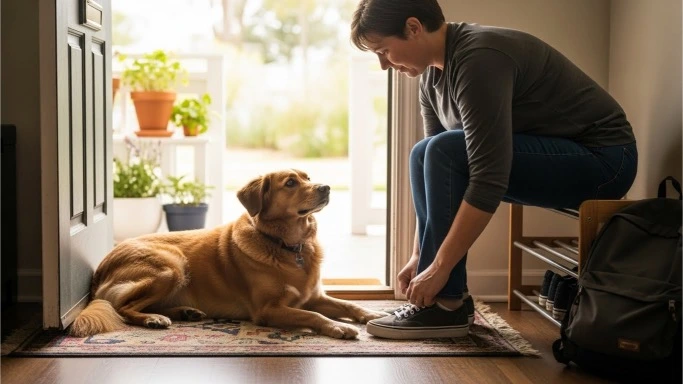
If your dog cries, paces, destroys things, or panics when you leave the house, you’re not alone. Separation anxiety is one of the most common — and most misunderstood — challenges dog parents face.
And it’s heartbreaking.
You want to help your dog feel safe.
You want to leave the house without guilt.
You want your dog to relax, not suffer.
The good news is this: separation anxiety can be managed, improved, and often greatly reduced with patience, understanding, and the right approach. This guide will walk you through what separation anxiety really is, how to recognize it, what helps, what doesn’t, and how to support your dog step by step — without breaking the bond you share.
This isn’t about “fixing” your dog.
It’s about helping them feel secure.
What Is Separation Anxiety in Dogs?
Separation anxiety happens when a dog experiences intense stress or fear when separated from their favorite person or people. This isn’t stubbornness or bad behavior. It’s an emotional response.
Dogs with separation anxiety don’t misbehave on purpose. They panic because they don’t yet understand that being alone is safe — or that you will always come back.
This anxiety can show up minutes before you leave, right after you’re gone, or even when you move to another room.
Common Signs of Separation Anxiety
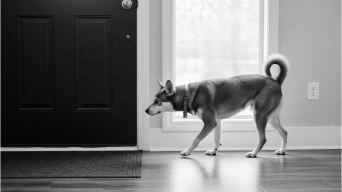
Every dog expresses anxiety differently, but these signs are common:
- Crying, whining, or barking when you leave
- Pacing or restlessness
- Destructive behavior (chewing doors, furniture, shoes)
- Scratching at doors or windows
- Drooling or panting excessively
- Accidents despite being house-trained
- Refusing food when alone
- Following you constantly when you’re home
If these behaviors only happen when you’re gone, anxiety is likely involved. check our article about Why Does My Dog Cry When I Leave?
Why Some Dogs Develop Separation Anxiety
There isn’t one single cause. Often, it’s a mix of factors.
1. Strong Emotional Bonds
Dogs form deep attachments to their people. Some dogs bond more intensely, especially sensitive or people-oriented breeds.
For related reading, read our article: Is My Dog Too Attached to Me?
2. Past Experiences
Dogs who were:
- Rehomed
- Surrendered
- Abandoned
- In shelters
- Suddenly separated from an owner
…may fear that being alone means losing you forever.
3. Sudden Routine Changes
New jobs, moves, schedule changes, or family changes can trigger anxiety.
4. Lack of Confidence Being Alone
Some dogs were never taught how to self-soothe or relax independently.
5. Age-Related Changes
Senior dogs may develop anxiety due to cognitive decline, hearing loss, or vision changes.
You will also like to read How to Help a Senior Dog Sleep Better.
What Separation Anxiety Is Not
Let’s clear up a few myths.
Separation anxiety is not:
- Disobedience
- Revenge
- Dominance
- Stubbornness
- Something your dog “grows out of” without help
Understanding this removes blame — from both you and your dog.
The Most Important Rule: Never Punish Anxiety
Punishment makes separation anxiety worse.
Scolding, yelling, or reacting emotionally:
- Increases fear
- Damages trust
- Teaches your dog that being alone leads to danger
Your dog already feels unsafe. They need reassurance, not correction.
How to Help a Dog with Separation Anxiety (Step by Step)
This is where real change begins.
1. Make Departures Calm and Predictable
Big emotional goodbyes can raise anxiety.
Instead:
- Keep leaving low-key
- Avoid dramatic hugs or speeches
- Act calm and confident
Your energy tells your dog whether the situation is safe.
2. Create Positive Associations with Alone Time

Your goal is to help your dog think:
“Being alone is okay.”
Try this:
- Give a puzzle toy, frozen Kong, or long-lasting chew only when you leave
- Pick something special they love
- Remove it when you return
This helps your dog associate your absence with something positive.
3. Practice Short Absences
Start small. Very small.
- Step outside for 10 seconds
- Come back calmly
- Increase time slowly
This builds confidence without overwhelming your dog.
4. Build Independence While You’re Home

Encourage your dog to relax away from you sometimes.
- Place a comfy bed nearby
- Reward calm behavior when they choose it
- Don’t constantly engage
This teaches your dog that distance doesn’t mean danger.
5. Stick to a Consistent Routine
Dogs feel safer when they know what to expect.
Try to keep:
- Feeding times
- Walk times
- Sleep schedules
- Departure routines
Consistency lowers anxiety.
6. Increase Physical and Mental Exercise
A tired dog is a calmer dog.
Daily:
- Walks
- Sniffing time
- Gentle play
- Training games
Mental stimulation is just as important as physical exercise.
7. Use Sound and Comfort Wisely
Some dogs relax with:
- Soft music
- White noise
- A TV left on
Leaving an item with your scent (like a worn shirt) can also help some dogs feel comforted.
8. Consider Calming Supports
For moderate anxiety, calming tools may help:
- Anxiety wraps or vests
- Vet-approved calming chews
- Natural calming supplements
Always consult your vet before adding supplements.
When Professional Help Is a Good Idea
You should seek help if:
- Your dog panics intensely
- Destruction or self-injury occurs
- Your dog cannot be left alone at all
- Anxiety worsens over time
A vet or certified trainer can create a personalized plan. In severe cases, medication may be recommended — not as a failure, but as support.
Because deep bonds matter even after loss, visit our Pet Memorial Pages.
What Not to Do (Even If It’s Tempting)
Avoid:
- Sneaking out silently
- Punishing destruction
- Crating without training
- Ignoring severe distress
- Rushing progress
Anxiety recovery is not linear. Setbacks happen — and that’s okay.
How Long Does It Take to Improve Separation Anxiety?
Every dog is different.
Some improve in weeks.
Others take months.
Progress depends on:
- Severity
- Consistency
- Past experiences
- Support level
Celebrate small wins. They matter.
Short FAQ: How to Help a Dog with Separation Anxiety
Can separation anxiety be cured?
It can be greatly improved and often managed very successfully.
Should I get another dog to help?
Not always. Anxiety is about the bond with you, not loneliness.
Is medication a last resort?
Medication can be a helpful tool, not a failure, when used appropriately.
Will my dog outgrow separation anxiety?
Not without guidance. Support makes the difference.
Conclusion: Your Dog Isn’t Broken — They’re Afraid

Separation anxiety doesn’t mean your dog is weak, spoiled, or difficult. It means they care deeply — sometimes too deeply — and haven’t yet learned that alone time is safe.
With patience, structure, and compassion, most dogs can learn to relax, trust, and feel secure even when you’re not home.
You don’t have to rush.
You don’t have to be perfect.
You just have to be consistent and kind.
Your dog isn’t asking for everything.
They’re asking to feel safe.