Can dogs eat bread ?
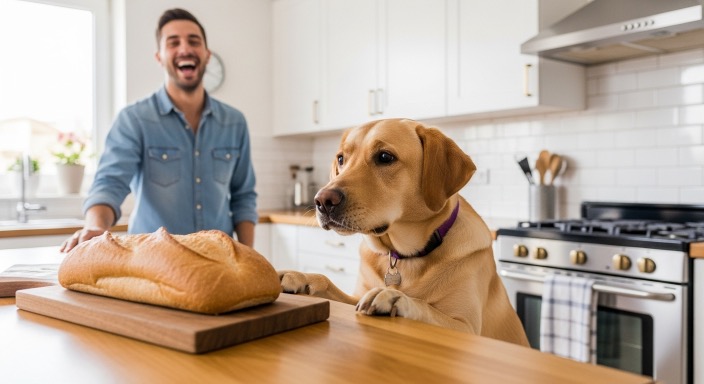
It happened in seconds — the faint crinkle of a bread bag, a suspicious silence, and then the unmistakable sound of chewing.
Max, a lovable Labrador with a talent for mischief, had stolen half a loaf from the kitchen counter. His family panicked — should they rush him to the vet? Is bread even safe for dogs?
If you’ve ever caught your dog sneaking a bite of your sandwich crust or nibbling toast crumbs off the floor, you’ve probably wondered the same thing: Can dogs eat bread safely?
The short answer is sometimes, but there’s a lot more to it. Bread isn’t toxic to dogs — but it’s not necessarily good for them either. Depending on the type, ingredients, and quantity, that innocent slice can range from harmless to harmful.
According to PetMD’s guide on human foods for dogs, plain white or wheat bread in small amounts is generally safe for most dogs — but flavored breads, dough, and those containing raisins, garlic, or nuts can be toxic.
Let’s dig into what’s safe, what’s risky, and how to tell if your pup’s snack-time curiosity needs a vet’s attention.
Can dogs eat bread ?
Is Bread Safe for Dogs? The Short and Honest Answer
In moderation, plain white or whole wheat bread is not toxic to dogs.
It’s mostly made of simple carbohydrates, which means your dog won’t get much nutrition from it — but one bite won’t harm them either.
However, there’s a big difference between safe and healthy.
While a small crust won’t hurt, feeding bread regularly can cause:
- Weight gain due to extra calories
- Blood sugar spikes in diabetic dogs
- Digestive discomfort in gluten-sensitive breeds
According to American Kennel Club (AKC), bread can be part of your dog’s diet only as an occasional treat — not a meal replacement or training snack.
Read our related post, “How to Boost Gut Health for Dogs After Antibiotics or Illness”, for better ways to keep your pup’s digestion strong.
Can dogs eat bread ?
Ingredients That Make Bread Dangerous for Dogs
Here’s where it gets serious — not all bread is created equal. Many human recipes contain ingredients that can be toxic or harmful to dogs.
Avoid These Common Bread Additives:
| Ingredient | Why It’s Dangerous |
| Raisins | Can cause kidney failure, even in tiny amounts. |
| Garlic or Onion | Damages red blood cells, leading to anemia. |
| Xylitol (sweetener) | Extremely toxic; causes rapid insulin release and hypoglycemia. |
| Nuts (esp. macadamia) | Can cause tremors, weakness, and vomiting. |
| Chocolate chips | Contains theobromine, highly poisonous to dogs. |
| Yeast dough (unbaked) | Expands in the stomach, causing painful bloating or alcohol poisoning. |
Can dogs eat bread ?

Can dogs eat bread ?
VCA Animal Hospitals confirms that these additives, even in small doses, can lead to severe health complications or emergencies.
The Yeast Problem: Why Raw Dough Is Dangerous
While baked bread is mostly harmless, unbaked dough is a serious hazard.
When dogs eat raw dough containing live yeast, the yeast ferments in their warm stomach, producing gas and alcohol. This can cause painful swelling, disorientation, and even alcohol poisoning.
Signs of yeast toxicity include:
- Bloating and discomfort
- Vomiting or drooling
- Weakness or staggering
- Low body temperature
If you suspect your dog has eaten raw dough, seek immediate veterinary help.
Pet Poison Helpline notes that this is an emergency requiring urgent treatment to relieve gastric pressure.
Check out “Dog Peeing Blood? Don’t Panic — Here’s What You Need to Know” to learn how to react fast in pet health emergencies.
Which Types of Bread Are Safest for Dogs?
If your pup’s been caught red-pawed at the breakfast table, don’t worry — some types of bread are safer than others. The key is to stick to plain, baked varieties without added sugar, spices, or toppings.
Safe (in moderation):
- Plain white or whole wheat bread — simple, low-sodium, and free of additives.
- Grain bread (without nuts or seeds) — adds some fiber but must be unsweetened.
- Homemade dog-safe bread — made with oat or rice flour, unsweetened applesauce, and no yeast.
Avoid:
- Garlic or onion bread — contains compounds that can cause anemia.
- Raisin bread — even one raisin can be toxic.
- Sweetened or flavored loaves — often contain xylitol or excess sugar.
Plain bread can be used as a mild filler for dogs with sensitive stomachs — but it should never replace a balanced meal.
Explore other safe snack ideas in “Low Maintenance Pets for Beginners: What You Should Know Before Adopting.”
How Much Bread Is Too Much?
A few small bites of plain bread won’t harm most dogs, but portion control is everything. Bread is calorie-dense and low in nutrients, meaning it can easily lead to weight gain.
Rule of thumb:
Bread should make up less than 5% of your dog’s daily calorie intake.
For small breeds, that’s just half a slice.
For large breeds, maybe one small slice per week.
Even though dogs can technically digest carbohydrates, their bodies aren’t designed for excess starch. Instead of bread, choose healthier treats like plain pumpkin, cooked carrots, or apple slices (with seeds removed).
Moderation prevents stomach upset and obesity in carb-heavy treats.
Read more about portion control and food safety in our article “How to Boost Gut Health for Dogs After Antibiotics or Illness.”
Signs Your Dog Might Be Sensitive or Allergic to Bread
While most dogs tolerate bread, some show signs of wheat intolerance or gluten sensitivity.
If your pup develops symptoms after eating bread, it’s time to reconsider those table scraps.
Watch for:
- Itching, red skin, or ear infections
- Gas, bloating, or diarrhea
- Lethargy or loss of appetite
If you notice these signs, consult your vet. They may recommend switching to a grain-free diet or testing for allergies.
VCA Animal Hospitals notes that food sensitivities can appear gradually, even after years of eating the same food.
Learn about other health red flags in “Dog Peeing Blood? Don’t Panic — Here’s What You Need to Know.”
Healthy Alternatives to Bread That Dogs Actually Love
Instead of bread, give your pup snacks that are both safe and beneficial. Dogs enjoy texture and flavor variety, so you can replace empty carbs with nutrient-packed bites that support their digestion, joints, and coat.
Vet-Approved Alternatives:
| Snack | Benefits |
| Cooked Sweet Potatoes | Rich in fiber, easy to digest, supports gut health. |
| Apple Slices (no seeds) | A crunchy treat full of vitamins A and C. |
| Plain Pumpkin Purée | Soothes the stomach and helps with stool consistency. |
| Baby Carrots | Low-calorie, great for teeth and chewing satisfaction. |
| Plain Cooked Rice or Oatmeal | Gentle on sensitive stomachs. |
The American Kennel Club (AKC) lists several human foods dogs can eat safely — as long as they’re unseasoned and portioned moderately.
Discover more wholesome options in “Pet of the Day Showcase” — where readers share their pets’ favorite healthy snacks!
When to Call the Vet
Even if your dog just ate bread, sometimes it’s better to play it safe.
You should contact your veterinarian immediately if you notice:
- Vomiting or diarrhea
- Swollen belly or signs of bloat
- Trembling or unusual behavior
- Weakness or staggering
Early intervention can prevent serious complications when dogs ingest questionable foods.
If your vet isn’t available, contact the ASPCA Animal Poison Control Center at (888) 426-4435 for 24/7 emergency guidance.
Homemade “Pup Bread” Recipe (Dog-Safe Treat)
If you love baking, you can make bread your dog can enjoy safely!
Here’s a simple, healthy, and vet-approved recipe that avoids all common allergens:
Ingredients:
- 1 cup oat flour
- ½ cup unsweetened applesauce
- 1 egg
- ½ tsp baking powder (optional)
- 1 tbsp plain yogurt
Instructions:
- Preheat oven to 350°F (175°C).
- Mix ingredients until smooth and doughy.
- Pour into a mini loaf pan and bake for 25 minutes.
- Let cool completely before serving.
- Store leftovers in the fridge for up to 3 days.
This “pup bread” offers a comforting smell and taste without the risks of salt, sugar, or yeast.
Add it to your “Popular Products” section — you can later affiliate-link baking molds or pet-safe ingredients from trusted brands.
Final Thoughts: Share the Love, Not the Loaf
Bread isn’t poison, but it isn’t a superfood either. A bite or two of plain bread might make your pup happy — but your love, attention, and balanced meals are what keep them truly healthy.
Think of bread as a “just this once” treat, not a daily habit. Always check ingredients and remember: if it’s flavored, sweetened, or doughy, it’s off-limits.
So next time Max the Labrador eyes your sandwich, go ahead and share a little crust — just skip the garlic, raisins, and butter. Your furry friend will still love you, loaf or not.Because at MyPetMyJoy.com, every wag, bark, and belly rub tells a story — and this one ends with a happy, healthy tail.
Can dogs eat bread ?