

can cats see in the dark?
Have you ever walked into a dark room and seen your cat move around with ease? It almost feels like they have supernatural powers. This leads many pet owners to ask: can cats really see in the dark?
The short answer is yes — cats see far better than humans in low light. However, they don’t have perfect night vision. Instead, their eyes have special adaptations that give them an edge when the lights go down. Let’s explore the science, myths, and practical tips behind your cat’s glowing eyes.
How Cat Eyes Are Built for the Night
Cats have evolved as twilight hunters. Their ancestors relied on catching prey during dawn and dusk, when light is limited. As a result, their eyes developed unique features to enhance vision in dim conditions.
- Large corneas and pupils: Cat pupils can expand up to three times wider than human pupils, allowing more light to enter.
- High rod cells: Rod cells detect light and motion. Cats have up to 8 times more rod cells than humans, making them incredibly sensitive in the dark.
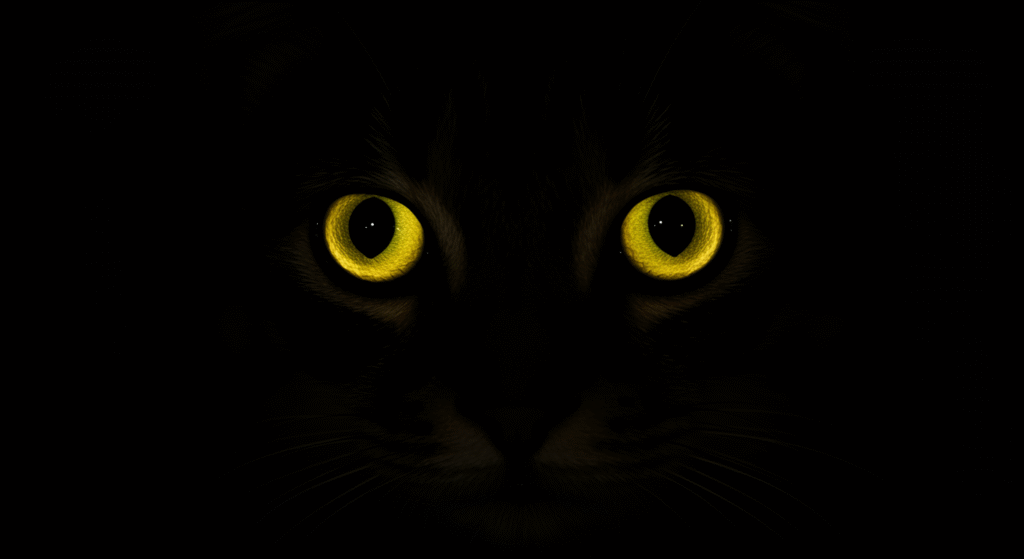
- The tapetum lucidum: This reflective layer acts like a mirror, bouncing light back through the retina. It’s also why your cat’s eyes glow at night.
👉 According to the Merck Veterinary Manual, these structures make cats well-suited for hunting in low light but not in complete darkness.
Can Cats See in Complete Darkness?
can cats see in the dark
This is where a common myth needs correcting. Cats cannot see in total darkness. Just like humans, they need at least some light to see. Their night vision is impressive, but it doesn’t work without any light at all.
Think of it this way: your cat can move easily in a room lit only by moonlight, while you might stumble. But if the room is pitch black, both of you are equally blind.
👉 The Noble Veterinary clinics confirms that cats need a small amount of light to navigate — their eyes simply use it more efficiently than ours.
Comparing Cat Vision to Human Vision
To understand how good a cat’s night vision is, let’s compare it to our own:
- Light sensitivity: Cats need about one-sixth the amount of light that humans do.
- Color perception: Cats see fewer colors. While we see a full rainbow, cats see mostly blues and greens. Reds and pinks often appear dull or gray.
- Sharpness: Humans see more detail up close. Cats’ vision is slightly blurrier, but they trade sharpness for sensitivity.
can cats see in the dark
Why Do Cat Eyes Glow in the Dark?
If you’ve ever seen your cat’s eyes glowing green or yellow at night, you’re witnessing the tapetum lucidum at work. This reflective layer doubles the light available to the retina, boosting low-light vision.
Interestingly, not all cats glow the same. Eye color, breed, and age can change how intense the glow appears.
👉 VCA Hospitals notes that this glow helps cats hunt silently in dim light, giving them an advantage over prey.
How Night Vision Helps Cats in Daily Life
Even though most pet cats don’t need to hunt, their night vision still benefits them:
- They can find their food bowl in a dimly lit kitchen.
- They navigate stairs or furniture without bumping into things.
- They stay alert to noises and movement while you sleep.
This explains why your cat often zooms around the house at midnight. They’re wired for activity in low light, when they feel most capable.
Myths vs Facts About Cats Seeing in the Dark
| Myth | Fact |
|---|---|
| Cats see in complete darkness | ❌ No, they need some light. |
| Cats see more colors than humans | ❌ They actually see fewer colors. |
| Cats’ vision is sharper than ours | ❌ Their vision is blurrier, but better in low light. |
| Cats’ eyes glow because of magic | ❌ The tapetum lucidum reflects light. |
How to Help Your Cat See Better at Night
Even with natural night vision, cats benefit from supportive environments:
- Use dim night lights in hallways or near litter boxes.
- Keep furniture consistent so your cat can memorize pathways.
- Monitor senior cats, as age can reduce their low-light vision.
- Provide safe climbing spots to match their instinctive hunting behavior.
👉 According to the ASPCA, senior cats may develop eye conditions that make low-light navigation harder, so regular vet checkups are crucial.

can cats see in the dark
So, can cats see in the dark? The answer is yes — far better than we can, thanks to their wide pupils, rod-rich retinas, and reflective tapetum lucidum. However, they cannot see in complete darkness. Like us, they need some light to guide their way.
Your cat’s glowing eyes are not just beautiful; they’re the result of incredible evolution. By understanding how feline vision works, you can create a safe, supportive home where your cat thrives both day and night.
For more insights on keeping your pet healthy, visit our Pet Health section. And if you’d like to explore the science further, the American Veterinary Medical Association provides excellent resources.