
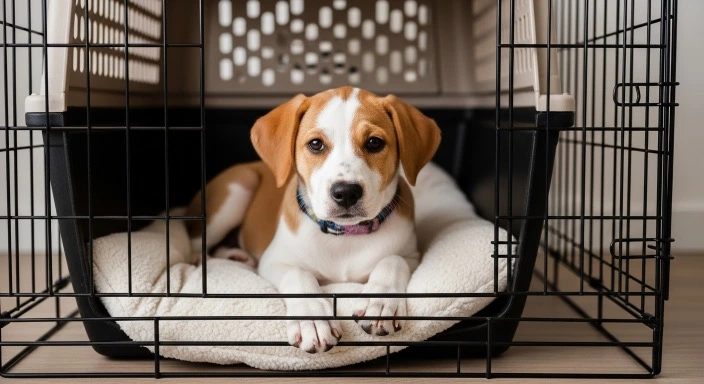
How to crate train a puppy fast
Bringing home a puppy is full of joy — and a little bit of panic.
You want to do everything right.
And you want them to feel safe.
Also you want peaceful nights.
And somewhere in those first few days, crate training enters the conversation.
If you’ve been searching how to crate train a puppy fast (while building confidence & trust), you’re likely trying to balance two things:
- Practical structure
- Emotional security
That balance is the heart of good crate training.
Done correctly, a crate doesn’t create distance.
It creates independence.
And it creates calm.
Also it creates resilience.
And yes — you can move quickly without rushing your puppy emotionally.
Let’s go deeper.
Why Crate Training Works (The Behavioral Science Behind It)
Crate training isn’t about confinement. It’s about tapping into natural canine instincts.
Dogs evolved from den-dwelling ancestors. Even today, many puppies instinctively seek small, enclosed spaces when they feel overwhelmed. According to the American Veterinary Medical Association, providing a secure resting area can reduce environmental stress for young dogs.
Here’s what’s happening neurologically:
- A predictable space lowers stress hormones.
- Clear routines reduce uncertainty.
- Small spaces can increase feelings of safety.
- Positive repetition builds neural associations.
When your puppy enters the crate and nothing scary happens, their brain begins linking the crate with safety.
This process is called classical conditioning.
Crate → Calm outcome
Door closes → You return
Rest → Nothing bad happens
Over time, the crate becomes a signal for relaxation.
That’s the science behind doing it gently.
How to Crate Train a Puppy Fast (While Building Confidence & Trust)
Fast does not mean forceful.
It means structured.
Here’s the layered approach that builds confidence and speeds learning.
Step 1: Make the Crate Emotionally Safe First
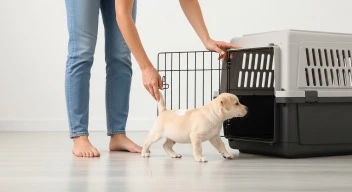
Before timing anything, build positive association.
- Leave the door open.
- Toss treats inside.
- Let your puppy walk in voluntarily.
- Praise softly.
The key: voluntary entry.
When a puppy chooses to step inside, their brain labels the crate as safe.
If you physically place them inside too early, you risk associating it with loss of control.
Step 2: Introduce Short Door Closures
Once your puppy walks in comfortably:
- Close the door for 5 seconds.
- Stay visible.
- Open before distress begins.
Why open before crying escalates?
Because you’re teaching:
“The door closes, and nothing scary happens.”
This builds trust faster than letting them panic.
Increase duration gradually:
10 seconds → 30 seconds → 1 minute → 3 minutes.
Stack small successes.
Step 3: Add Gentle Distance
Confidence grows when puppies learn:
“I can be alone briefly — and my person returns.”
Start with:
- One step away.
- Two steps away.
- Out of sight for 10 seconds.
- Return calmly.
No dramatic greetings.
Excited returns can teach puppies that separation is a big emotional event. Calm returns teach stability.
Why Puppies Cry in the Crate (Behavioral Layers)
Crying is communication, not defiance.
Common reasons:
1. Adjustment Period
New environment + separation = mild stress.
2. Biological Needs
Young puppies have small bladders.
3. Attachment Shift
They’re learning independence.
4. Overstimulation
If they go into the crate overly energized, settling becomes harder.
The ASPCA Pro encourages gradual exposure and positive reinforcement to reduce anxiety responses.
Short, consistent sessions help the nervous system adapt.
If you’re unsure whether your puppy’s crate sounds signal stress or simple adjustment, our guide Dog Body Language: How to Understand What Your Dog Is Really Saying can help you read the subtle cues.
How Long Does Crate Training Take?
This is one of the most common questions new puppy parents ask — and it makes sense.
When you’re tired, adjusting to a new routine, and listening to even small amounts of crying, you want to know:
How long will this last?
The honest answer is: it depends on the puppy — and on the process.
Some puppies begin settling comfortably in their crate within a few days. Others may need two to three weeks of steady, consistent exposure before the crate feels truly safe. Sensitive or highly attached puppies may take longer, especially if they’re still adjusting to being away from littermates or experiencing their first nights alone.
Several factors influence how long crate training takes:
Age
Younger puppies (8–10 weeks) are often more adaptable, but they also have shorter attention spans and smaller bladders. That means progress can feel quick during the day — but nights may take longer.
Temperament
Confident, curious puppies may explore the crate eagerly. More cautious or sensitive puppies may need extra reassurance. Neither personality is “better.” They simply learn at different speeds.
Previous Experiences
A puppy raised in a calm breeder environment may adjust more smoothly than one who has experienced abrupt changes or inconsistent routines.
Household Energy
Busy, noisy environments can make settling harder. A predictable rhythm — play, potty, rest — often speeds the process.
Consistency
Crate training tends to move faster when sessions are frequent but short, calm, and structured. Inconsistent timing can unintentionally slow learning because the puppy cannot predict what happens next.
It’s also important to understand that progress is rarely linear.
You might have:
- Three calm nights in a row
- Followed by one difficult evening
That doesn’t mean you’ve failed. Puppies go through developmental leaps, growth spurts, and emotional shifts. Sometimes a brief regression simply reflects a new phase of learning.
Think of crate training like building muscle memory.
Each calm entry into the crate builds confidence.
And each peaceful exit reinforces safety.
Also each predictable return strengthens trust.
Over time, those small moments add up.
Many puppies reach a place where they:
- Walk into the crate on their own
- Settle within minutes
- Sleep peacefully for age-appropriate durations
That timeline may be days. It may be weeks.
What matters most isn’t how quickly it happens — but that your puppy feels secure while it does.
When safety leads the process, confidence grows. And when confidence grows, crate training naturally becomes faster and easier for both of you.
Building Confidence Through Predictability
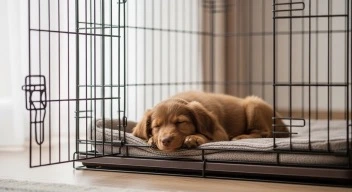
Dogs thrive on routine.
Predictable patterns reduce anxiety.
Create a daily rhythm:
- Potty
- Short play
- Calm wind-down
- Crate rest
This sequence signals:
“Crate time follows activity.”
Over time, the crate becomes part of a reliable cycle.
Confidence grows when the world feels predictable.
Troubleshooting Common Crate Training Challenges
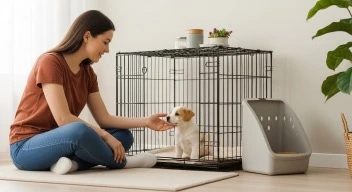
Let’s go deeper into real-life obstacles.
Problem: My Puppy Screams Immediately
Possible causes:
- Introduced too quickly
- Overtired
- Overstimulated
- Too much duration too soon
Solution:
- Reduce time.
- Add more positive crate games.
- Increase pre-crate exercise slightly (without exhaustion).
Problem: My Puppy Only Settles When I’m Visible
This is attachment development.
Gradual desensitization helps:
- Sit beside crate.
- Move slightly away.
- Leave room for seconds.
- Return calmly.
Consistency builds tolerance.
Problem: Regression After Progress
Very common.
Growth spurts, routine changes, or stress can cause temporary setbacks.
Return to shorter sessions.
Rebuild gradually.
Progress isn’t linear.
Problem: My Puppy Falls Asleep but Wakes Crying
Likely bladder-related or mild confusion.
Young puppies may need nighttime breaks.
Place the crate near your bed initially.
Gradually increase distance over time.
This supports attachment without dependency.
The Emotional Bond During Crate Training
Let’s acknowledge something important.
Crate training can feel emotional.
Hearing your puppy cry may trigger:
- Guilt
- Doubt
- Anxiety
- Fear of “doing it wrong”
But confidence-building sometimes includes mild discomfort.
Your job is to prevent panic — not eliminate all adjustment.
You are teaching:
- Emotional regulation
- Self-soothing
- Security within structure
That’s not cruelty.
But that’s parenting.
Just like when your dog brings you a toy but won’t let go, crate training is less about control and more about shared trust and communication.
Positive Reinforcement vs. Fear-Based Methods
How you introduce the crate matters more than how quickly you do it.
There are two very different approaches people sometimes use when crate training:
- Positive reinforcement
- Fear-based or force-based methods
The difference isn’t just about technique.
It’s about emotional impact.
What Positive Reinforcement Looks Like
Positive reinforcement means your puppy learns that the crate predicts good things.
- Treats appear inside.
- Praise follows entry.
- Calm behavior is rewarded.
- The door closes gently and reopens predictably.
Your puppy begins to think:
“This space feels safe.”
“Good things happen here.”
“I can relax.”
Over time, their nervous system settles more quickly. Their body softens. They may even choose to enter the crate on their own.
That’s not obedience through pressure.
It’ss confidence built through trust.
Modern behavioral guidance from organizations like AVSAB emphasizes reward-based training because it strengthens the human–animal bond and reduces anxiety responses.
In simple terms: learning sticks better when the puppy feels secure.
What Fear-Based Methods Look Like
Fear-based approaches often involve:
- Forcing a puppy into the crate
- Ignoring prolonged distress
- Using the crate as a consequence
- Shouting or startling when they resist
These methods can sometimes produce fast silence.
But silence is not the same as calm.
A puppy who stops crying out of fear may still be experiencing stress internally. Elevated stress hormones can linger, and over time, this can lead to crate aversion, anxiety around confinement, or even distrust toward the person closing the door.
Fear may suppress behavior temporarily.
Trust reshapes it permanently.
Why Trust Creates Faster Long-Term Results
It may feel counterintuitive, but going slower emotionally often creates faster long-term progress.
When your puppy feels safe, they:
- settle more quickly.
- resist less.
- build positive associations faster.
- recover from minor setbacks more easily.
Confidence reduces resistance.
And resistance is what slows crate training down.
When a puppy trusts the process, you spend less time repairing fear and more time building stability.
The Emotional Layer You Can’t See
Crate training is not just behavioral conditioning.
It’s attachment development.
Every time you:
- Close the door gently
- Return predictably
- Respond calmly
You’re teaching your puppy something powerful:
“You are safe with me.”
“I will come back.”
“This space is not scary.”
That lesson reaches beyond the crate.
It influences how your puppy handles:
- Short separations
- New environments
- Vet visits
- Grooming appointments
- Travel
Positive reinforcement doesn’t just create crate comfort.
It builds emotional resilience.
We conclude that the goal isn’t to create a puppy who is quiet because they’re afraid to protest.
The goal is to create a puppy who rests because they feel secure.
That difference may seem small.
But it shapes the entire relationship you build together.
How Crate Training Supports Future Independence
Well-trained crate comfort can help with:
- Vet visits
- Travel
- Boarding
- Grooming
- Recovery rest
- New environments
When a dog learns:
“Small space = safe space”
They carry that resilience forward.
Confidence training early pays long-term emotional dividends.
Crate training also supports healthy independence. If you’ve noticed clingy behaviors, you may also find insight in Is My Dog Too Attached to Me? The Honest Truth.
When to Be Concerned
Seek gentle professional guidance if you observe:
- Extreme panic
- Self-harm attempts
- Persistent drooling from stress
- Refusal to eat even outside crate
- Ongoing regression beyond adjustment period
A qualified trainer using positive methods can personalize support.
Asking for help is strength — not failure.
Teaching a puppy to settle calmly in a crate builds impulse control — the same foundation that helps when learning How to Train a Puppy Not to Bite.
Nighttime Crate Training: Deep Dive

Night introduces new variables:
- Darkness
- Separation
- Quiet house
- Biological needs
Strategies:
- Keep crate near bed initially.
- Provide comfort item (non-chokable).
- Use consistent bedtime routine.
- Keep nighttime potty breaks quiet and calm.
Over time, puppies adapt to nighttime independence.
Sleep becomes predictable.
Frequently Asked Questions
Is crate training cruel?
Not when done properly. It can provide safety and routine.
How fast can I crate train a puppy?
Some adjust within days, but many need a few weeks of consistency.
Should I let my puppy “cry it out”?
Prolonged distress isn’t helpful. Adjust duration instead.
What if my puppy hates the crate?
Rebuild positive association slowly.
Can I crate train an older puppy?
Yes, though adjustment may take longer.
Final Thoughts: Confidence First, Speed Follows
If you’ve been searching how to crate train a puppy fast (while building confidence & trust), remember:
Speed is a byproduct of safety.
When your puppy feels:
- Secure
- Predictable
- Supported
They adapt faster.
Crate training isn’t about control.
It’s about creating a safe place your puppy chooses.
And when they walk in willingly — relaxed, tail soft, body calm — you’ll know you built something stronger than obedience.
You built trust.
Celebrate every moment with your furry friend on MyPetMyJoy.com — where pets are family forever.