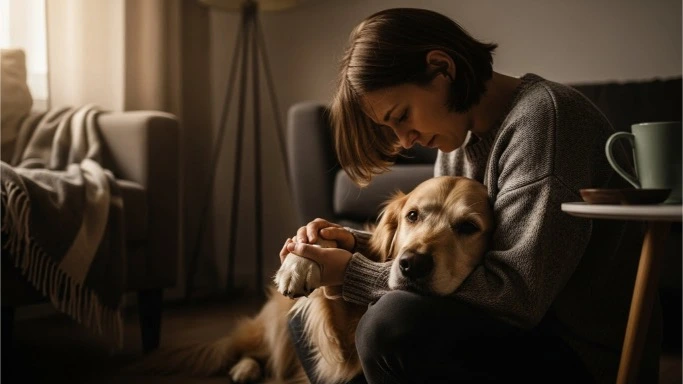
Losing a pet doesn’t just hurt.
It reshapes you.
If you’re here, you may be carrying a quiet ache. Maybe the house feels different. Maybe routines feel hollow. Maybe you’re asking questions you never expected to ask.
This page is here for one purpose:
To help you understand why losing a pet changes us forever — and why that change is not weakness, but love.
This is your complete guide to pet loss, grief, healing, and the lasting bond that never disappears.
Pet Loss Grief Is Real (Even If Others Don’t Understand)

One of the hardest parts of losing a pet is feeling like you’re supposed to “move on” quickly.
People may say things like:
- “At least it was just an animal.”
- “You can always get another one.”
- “Time to move on.”
But grief doesn’t work that way.
According to ASPCA, grieving a pet is a valid emotional experience because animals often provide unconditional love and emotional stability — something many humans struggle to offer consistently.
Your pain is not exaggerated.
Your bond was real.
Your grief is valid.
How Losing a Pet Changes You Forever

1. You See Love Differently
After losing a pet, love feels deeper — and more fragile.
You learn that:
- Love doesn’t require words
- Presence matters more than perfection
- Time together is never guaranteed
Many people say their pet taught them how to love more openly, even after the loss.
2. You Become More Aware of Mortality
Pets often leave us earlier than we expect. That reality changes how we think about time.
You may find yourself:
- Holding loved ones closer
- Being more present
- Appreciating small, quiet moments
Loss sharpens awareness. It hurts — but it also deepens meaning.
3. Your Daily Life Feels Different (For a Long Time)
Grief shows up in routine moments:
- Feeding time
- Walks
- Bedtime
- Coming home
These moments don’t “heal” quickly. They soften slowly.
That’s normal.
Many grieving pet parents find comfort through remembrance rituals, like creating a tribute on the Pet Memorial Page .
4. You Carry the Bond Forward
Love doesn’t disappear when a pet dies.
It changes form.
You carry them in:
- Memories
- Habits
- The way you care for other animals
- The way you speak about love
Grief is love with nowhere to go — but it still exists.
The Unique Pain of Anticipatory Grief
Sometimes, grief begins before the loss.
If your pet was ill, aging, or declining, you may have felt:
- Anxiety
- Sadness
- Guilt
- Fear
This is called anticipatory grief, and it’s incredibly common.
Organizations like American Kennel Club note that this form of grief can be just as heavy as grief after loss — because your heart starts preparing before your mind is ready.
Grieving a Pet Looks Different for Everyone
There is no “right” way to grieve.
Some people cry openly.
Others become quiet.
Some want to talk.
Others withdraw.
All of it is normal.
You might:
- Feel okay one day and devastated the next
- Laugh at a memory, then cry minutes later
- Miss them intensely years later
Grief is not linear. Healing doesn’t mean forgetting.
When Guilt Becomes Part of the Grief
Many pet parents struggle with guilt:
- “Did I do enough?”
- “Should I have noticed sooner?”
- “Was it the right decision?”
These thoughts are common — especially after euthanasia or sudden loss.
Here’s the truth most people need to hear:
Loving decisions made with compassion are never wrong.
Your pet knew love, safety, and care because of you. That matters more than any single moment at the end.
Why Losing a Pet Feels So Deep
When people say, “It was just a dog,” or “It was just a cat,” something inside you may tighten.
Because you know it wasn’t “just” anything.
Pets are:
- Daily companions
- Emotional anchors
- Silent comforters
- Routine stabilizers
- Unconditional lovers
Unlike many human relationships, pets:
- Don’t judge
- Don’t keep score
- Don’t leave during hard times
That kind of presence becomes part of your emotional foundation.
So when it’s gone, it’s not small.
It’s seismic.
Organizations like the ASPCA acknowledge that grief after losing a pet can mirror the grief experienced after losing a close family member.
Because attachment is attachment.
The Stages of Pet Grief (And Why They’re Not Linear)
You may have heard of grief stages:
- Denial
- Anger
- Bargaining
- Sadness
- Acceptance
But pet grief doesn’t follow clean steps.
You might:
- Cry unexpectedly months later
- Feel guilt during quiet moments
- Laugh at a memory and then feel sadness immediately
That doesn’t mean you’re healing “wrong.”
Grief moves in waves. And with pets, those waves are often tied to routine.
Feeding time.
Morning walks.
The sound of tags jingling.
The Emotional Impact of Losing a Pet
1. Loss of Daily Structure
Pets structure our days more than we realize.
Wake up.
Feed.
Walk.
Play.
Bedtime.
When that rhythm disappears, your nervous system feels it.
2. Loss of Unconditional Presence
Your pet didn’t care about:
- Your job performance
- Your bad mood
- Your appearance
They loved you in raw, ordinary moments.
That loss creates a quiet loneliness.
3. Identity Shift
You may have identified as:
- “Dog mom”
- “Cat dad”
- “Rescue parent”
After loss, identity can feel blurred.
This is normal. Your role shifted.
How to Honor Your Pet’s Memory in Healthy Ways

Creating meaning from loss can help grief soften.
Some gentle ways to honor your pet include:
- Writing a letter to them
- Creating a photo memorial
- Lighting a candle on special days
- Donating in their name
- Sharing their story
Many families find comfort using the Light a Candle for a Lost Pet as a quiet moment of remembrance.
Practical Side of Loss: Cremation, Burial, and Memorials
Grief is emotional — but there are also practical decisions.
Questions like:
- How much does it cost to cremate a dog?
- What are my options?
- Should I keep ashes?
We break down those realities respectfully in:
How Much Does It Cost to Cremate a Dog?
Making decisions while grieving is hard. There is no “correct” choice — only what feels meaningful to you.
Will I Ever Love Another Pet the Same Way?
This is one of the most common questions — and one of the most emotional.
The honest answer:
You won’t love the same way. You’ll love differently.
And that’s okay.
A new pet doesn’t replace the one you lost.
They don’t compete.
They don’t erase memories.
Love expands. It doesn’t divide.
When Grief Feels Overwhelming
If your grief feels heavy or unmanageable, you’re not weak — you’re human.
Some people benefit from:
- Pet loss support groups
- Talking to a counselor
- Reading stories from other pet parents
National Institutes of Health offer feline hospice and palliative care guidelines.
Asking for help doesn’t diminish love. It honors it.
Do Dogs Go to Heaven? Exploring Faith and Hope
One of the most common grief questions is:
Do dogs go to heaven?
If you’ve asked this, you’re not alone.
We explored this deeply in:
Do Dogs Go to Heaven? Exploring Faith, Love, and Loss
That article looks at:
- Religious perspectives
- Spiritual comfort
- Why the Rainbow Bridge resonates
Whether your belief is religious, spiritual, or symbolic, hope can soften grief without denying reality.
Helping Children Through Pet Loss
Children often experience pet loss as their first encounter with death.
They may ask:
- “Where did he go?”
- “Will she come back?”
- “Did I do something wrong?”
It’s important to respond gently and honestly.
We share a full guide here:
Help a Child Say Goodbye to a Pet
Children don’t need perfect explanations.
They need safety and reassurance.
Short FAQ: Losing a Pet
Why does losing a pet hurt so much?
Because pets provide unconditional love, routine, and emotional safety. Losing them affects both heart and daily life.
How long does pet grief last?
There is no timeline. Some people grieve for weeks, others for years. Healing doesn’t mean forgetting.
Is it normal to grieve a pet more than a person?
Yes. Pets often share daily intimacy and emotional closeness that humans may not.
Should I get another pet right away?
Only when you feel ready. There’s no correct timing.
What to Keep in Mind
Every pet is different.
Every relationship is different.
Every grief journey is different.
There is no “stronger” way to grieve.
There is only your way.
If your heart feels permanently changed, it’s because love left a permanent mark.
A Love That Never Ends

Losing a pet changes you — but it doesn’t break you.
It teaches you:
- How deeply you can love
- How meaningful small moments are
- How bonds don’t end with goodbye
Your pet’s life mattered.
Your grief reflects that love.
And that love stays with you — always.
Celebrate every moment with your furry friend on MyPetMyJoy.com — where pets are family forever.