
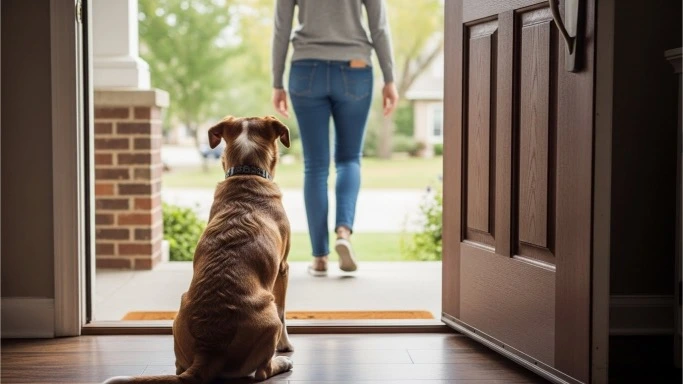
You grab your keys.
You put on your shoes.
And suddenly, your dog starts crying, whining, or pacing near the door.
If this happens every time you leave, it can pull at your heart. You may feel guilty, worried, or even helpless. Many dog parents ask the same question:
Why does my dog cry when I leave?
The honest answer is comforting — and a little emotional. Most of the time, your dog isn’t being dramatic or misbehaving. They’re reacting to love, attachment, routine, and emotion. In some cases, though, crying can point to anxiety that needs gentle support.
In this guide, we’ll talk openly about:
- What your dog’s crying really means
- The difference between normal attachment and separation anxiety
- Why some dogs cry more than others
- What helps (and what makes it worse)
- How to leave your dog feeling calm, safe, and confident
No fear. No judgment. Just clarity and care.
The Short Answer: Your Dog Cries Because You Matter
Dogs form deep emotional bonds with their humans. When you leave, your dog notices — immediately.
Crying is one of the ways dogs express:
- Attachment
- Uncertainty
- Anticipation
- Stress
- Emotional discomfort
In many cases, your dog is simply saying, “I miss you already.”
But context matters. Let’s look at the real reasons behind this behavior.
1. Your Dog Is Emotionally Attached to You

This is the most common — and most loving — reason.
Dogs are social animals. They thrive on connection. If you’re your dog’s favorite person, your presence feels safe and comforting.
When you leave, your dog may cry because:
- You are their emotional anchor
- You bring routine and security
- They feel calm when you’re nearby
This type of crying is usually brief and settles once you’re gone.
Signs this is normal attachment:
- Crying lasts a few minutes
- Your dog eventually relaxes
- No destructive behavior occurs
- Eating and sleeping stay normal
This isn’t a problem. It’s connection.
2. Your Dog Has Learned Your Leaving Cues
Dogs are excellent observers.
Over time, your dog learns that certain actions mean you’re about to leave:
- Picking up keys
- Putting on shoes
- Grabbing a bag
- Turning off lights
Your dog may start crying before you even leave, simply because they recognize the pattern.
This behavior often sounds emotional, but it’s really anticipation mixed with mild stress.
3. Puppies Cry Because They’re Still Learning Independence
If your dog is a puppy, crying when you leave is extremely normal.
Puppies:
- Feel safest near caregivers
- Haven’t learned that departures are temporary
- Are still developing emotional regulation
Most puppies outgrow this behavior as they mature — especially when given reassurance and routine.
4. Some Dogs Cry Because They’re Bored or Under-Stimulated
Not all crying is emotional distress.
Sometimes, dogs cry because:
- They associate your departure with inactivity
- They lack mental stimulation
- They don’t have engaging toys or routines
In these cases, crying may stop once they find something to do.
A bored dog often becomes vocal.
5. Breed Personality Matters
Some dog breeds are more vocal and emotionally expressive than others.
Breeds that commonly cry or whine when left include:
- Labrador Retrievers
- Golden Retrievers
- German Shepherds
- Border Collies
- Australian Shepherds
- Huskies
- Beagles
These breeds were bred for companionship, work, or close human interaction — so separation can feel more intense.
Check our article on Best Breeds for Loving, Loyal Companionship
6. Crying Can Be a Sign of Separation Anxiety

Now let’s talk about the important distinction.
Crying becomes a concern when it’s paired with panic, not just sadness.
Signs of Separation Anxiety Include:
- Crying or barking nonstop after you leave
- Destructive behavior (doors, furniture, windows)
- Pacing, drooling, or trembling
- Accidents despite being house-trained
- Refusing food when alone
- Extreme distress before departure
If your dog shows these signs, the crying is not about missing you — it’s about fear of being alone.
This is common, treatable, and not your fault.
You will also like to read Why Does My Dog Follow Me Everywhere
7. Sudden Crying Can Signal a Change
If your dog never cried before and suddenly starts, ask what changed.
Common triggers include:
- Moving homes
- New work schedule
- Loss of another pet
- Illness or pain
- Changes in routine
- Emotional stress in the household
Dogs respond strongly to change — even subtle ones.
8. Senior Dogs May Cry More When Left
Older dogs sometimes cry because:
- Vision or hearing is declining
- Cognitive changes occur
- They feel disoriented alone
- They rely more on familiar people
In senior dogs, crying is often about comfort, not anxiety.
Read also How to Help a Senior Dog Sleep Better
Is It Bad That My Dog Cries When I Leave?
Not always.
Crying is normal when:
- It’s brief
- Your dog settles after you leave
- There’s no panic or destruction
It becomes a concern only when your dog cannot calm themselves.
The goal isn’t silence.
The goal is emotional safety.
What NOT to Do When Your Dog Cries
Some well-intended actions can make crying worse.
Avoid:
- Scolding or yelling
- Sneaking out to “avoid” crying
- Overly emotional goodbyes
- Punishing anxiety-driven behavior
These approaches increase confusion and insecurity.
How to Help Your Dog Feel Calm When You Leave

Here’s what truly helps.
1. Keep Departures Low-Key
Say goodbye calmly — or not at all.
Your dog takes cues from your energy. Calm exits teach that leaving is normal.
2. Create a Positive Leaving Routine
Give your dog something enjoyable only when you leave:
- Puzzle toy
- Frozen Kong
- Long-lasting chew
This helps your dog associate your departure with something good.
3. Increase Daily Exercise
A tired dog is more relaxed.
Daily:
- Walks
- Sniffing time
- Gentle play
Physical and mental stimulation reduce emotional distress.
4. Practice Short Absences
Leave for:
- 1 minute
- 5 minutes
- 10 minutes
Gradually increase time away. This builds confidence.
5. Stick to Predictable Schedules
Routine creates security.
Dogs feel safer when they know what to expect.
6. Consider Calming Support
For some dogs, calming aids help:
- Calming music
- Anxiety wraps
- Vet-approved calming supplements
For severe anxiety, professional guidance is best.
When to Talk to a Vet or Trainer
Seek help if:
- Crying escalates over time
- Panic behaviors appear
- Your dog injures themselves
- Your dog cannot be left alone at all
Separation anxiety is manageable with the right support.
Short FAQ: Why Does My Dog Cry When I Leave?
Q1: Is it normal for dogs to cry when left alone?
Yes, especially if the crying is brief and your dog settles afterward.
Q2: Does crying mean my dog is sad?
Often, yes — but sadness doesn’t always mean anxiety.
Q3: Can dogs grow out of this behavior?
Yes. With routine and reassurance, many dogs do.
Q4: Should I comfort my dog when they cry?
Comfort calmly, but avoid reinforcing panic.
The bottom line

When your dog cries as you leave, it doesn’t mean you’re doing something wrong.
It usually means:
- You matter deeply
- Your dog feels connected
- Your presence brings comfort
With patience, routine, and understanding, most dogs learn that departures are temporary — and that you always come back.
And that’s the answer you’ll love most.