Dog body language
If you’ve ever looked at your dog and thought,
“What are you trying to tell me?” — you’re not alone.
Dogs may not use words, but they are constantly communicating.
Through their:
- Tail
- Eyes
- Ears
- Mouth
- Posture
- Movement
- Energy
They are speaking all the time.
Learning dog body language isn’t about becoming an expert.
It’s about deepening your connection.
It’s about noticing the small signals before they turn into confusion.
It’s about building trust.
This pillar page is your complete guide to understanding what your dog is really saying — in a clear, compassionate, and practical way.
The Basics of Canine Communication
Dogs don’t hide their emotions. Their bodies are walking billboards for how they feel — if we just know what to look for.
The Four Emotional “Zones”
| Emotion | Typical Signals | What It Means |
| Relaxed & Happy | Loose body, open mouth, tail wag mid-level, soft eyes | “Life is good!” |
| Alert & Curious | Forward ears, still tail, closed mouth, focused stare | “What’s that?” |
| Fearful or Submissive | Crouched posture, tucked tail, avoiding eye contact | “I’m unsure or scared.” |
| Aggressive or Defensive | Stiff body, raised hackles, growl, teeth showing | “Back off — I need space.” |
These cues can change in seconds depending on context — that’s why understanding body clusters (multiple signals together) is more accurate than focusing on just one.
The Tail: Not Every Wag Means Happy
Dog body language
Dog body language
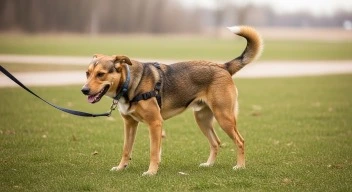
The tail might be your dog’s loudest communicator — but also the easiest to misread.
Tail Position and Meaning
- Mid-level, relaxed wag: Friendly and content.
- High and stiff wag: Alert, dominant, or slightly tense.
- Low wag or tucked tail: Uncertain or submissive.
- Slow, sweeping wag: Calm greeting — think “I’m cool with you.”
- Fast, tight wag: Anxiety or over-stimulation — not necessarily joy.
The American Kennel Club explains that context and body posture must be read together — a wag paired with stiff muscles often signals stress, not happiness.
Eyes and Ears — The Windows of Emotion
Dogs use eye contact and ear movement to express subtle moods.
Eyes
- Soft eyes, slow blinks: Relaxed and affectionate.
- Wide eyes, visible whites (“whale eye”): Fear or guarding behavior.
- Averted gaze: Submission or avoidance of conflict.
Ears
- Forward ears: Curiosity or confidence.
- Flattened ears: Fear, anxiety, or guilt.
- One ear forward, one back: Split attention — cautious curiosity.
Try observing these in everyday situations — feeding, walks, meeting guests. You’ll begin noticing how quickly expression changes.
Posture & Movement — The Full-Body Story
The way your dog stands, walks, or even breathes tells you everything about their comfort level.
Common Postures
- Loose, wiggly body: Safe, playful, relaxed.
- Weight forward, stiff body: Guarding or asserting dominance.
- Crouched low, leaning back: Fear or uncertainty.
- Rolling onto back (with wagging tail): Playful submission.
- Rolling onto back (rigid, still): Fearful submission — not play.
For step-by-step behavior training, visit our guide “How to Stop Your Dog From Barking All the Time — Without Punishment” — it explains calm communication during noisy triggers.
🐕🦺
The Mouth: Smiles, Yawns, and Growls
Dog body language

Dog body language
Your dog’s mouth is like their mood barometer — subtle but powerful.
Reading the Mouth
- Open mouth, loose lips: Happy, relaxed.
- Closed mouth, tense jaw: Focused or anxious.
- Lip licking (without food nearby): Stress or appeasement.
- Yawning when not tired: Calming signal to diffuse tension.
- Growling: Not always aggression — it’s communication.
A growl is often a warning sign — a dog’s way of saying “I’m uncomfortable.” Respect it; don’t punish it.
Growls prevent bites — punishing them only silences your dog’s warning system.
The Tail-End Details: Hackles, Paws & More
Hackles — that ridge of fur along your dog’s back — can tell you a lot.
When Hackles Rise
Raised hackles aren’t always aggression; they can mean arousal, excitement, or fear. It’s like goosebumps in humans — emotional intensity, not just anger.
Paw Lifts
A lifted paw (without limping) can indicate:
- Curiosity (“What’s that smell?”)
- Hesitation (“I’m unsure.”)
- Anticipation (“Are we going now?”)
Shaking Off
If your dog “shakes off” like they’re drying water after stress or training, it’s a reset signal — clearing tension and returning to calm.
Dog body language
Reading Context: One Signal Never Tells the Whole Story
Body language works like a sentence — not a word.
A wag, stare, or bark means little until you see the whole dog.
Example:
- Wagging tail + stiff body = alertness, not joy.
- Ears forward + mouth closed + weight forward = guarding behavior.
- Loose body + play bow + relaxed face = invitation to play.
Take a snapshot of your dog’s entire stance before interpreting.
Dog body language
Vocal Clues That Complete the Picture
While body language speaks volumes, sound adds punctuation marks.
| Sound | Meaning |
| Soft whine | Seeking attention or anxious |
| Excited bark | Play invitation or greeting |
| Low growl | Warning or discomfort |
| High-pitched bark | Surprise or frustration |
| Huff or sigh | Relaxation or boredom |
Combine vocal and visual cues for accuracy — just like humans use tone and gesture together.
Dog body language
When Dogs Communicate With Other Dogs
Ever seen two dogs “freeze” during play and then suddenly explode into running circles? That’s communication in motion.
They use mirrored signals — play bows, lip licks, averted eyes — to say, “This is still friendly!”
If you understand those moments, you can prevent fights, step in when needed, and appreciate the beautiful fluency dogs share.
How to Respond to Your Dog’s Signals
Once you can read what your dog is saying, the next step is replying in a way they understand.
Do:
- Stay calm — dogs mirror your energy.
- Use consistent tone and body posture.
- Reward calm, confident behavior.
- Give space when they ask for it (look away, move aside).
Don’t:
- Punish fear or warning growls.
- Force interactions when they’re uncomfortable.
- Overwhelm shy dogs with sudden hugs or loud noises.
Check out “How to Train a Puppy Not to Bite” for gentle behavior-shaping methods that align perfectly with reading body language.
Dog body language
Building Trust Through Understanding
The real reward of learning canine body language isn’t just preventing bites or barks — it’s the bond.
When your dog feels seen, they relax. When they relax, they listen.
Over time, you’ll communicate through a glance, a nod, or a raised eyebrow. It’s quiet magic — and it’s built one moment of trust at a time.
Once you understand what your dog says without words, you’ll never see them the same way again — they’ll finally feel heard.
Final Thought — Listen Beyond the Bark
Understanding canine body language is like learning a new language — and your teacher has four paws and a wagging tail.
Start observing. Notice small patterns. Respect boundaries.
The more you read their signals, the more they’ll trust you to lead calmly and confidently.
Your dog’s not misbehaving — they’re just communicating in their native tongue.
It’s our job to listen.